I built Grindr's in-app home for original series and content, with a custom video player that keeps viewers in the app and a CMS the brand team runs on its own.
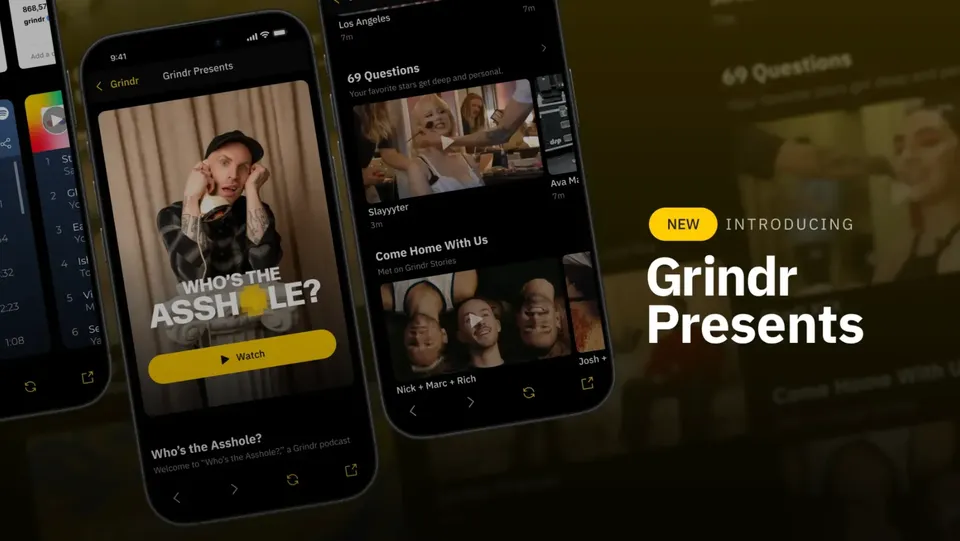
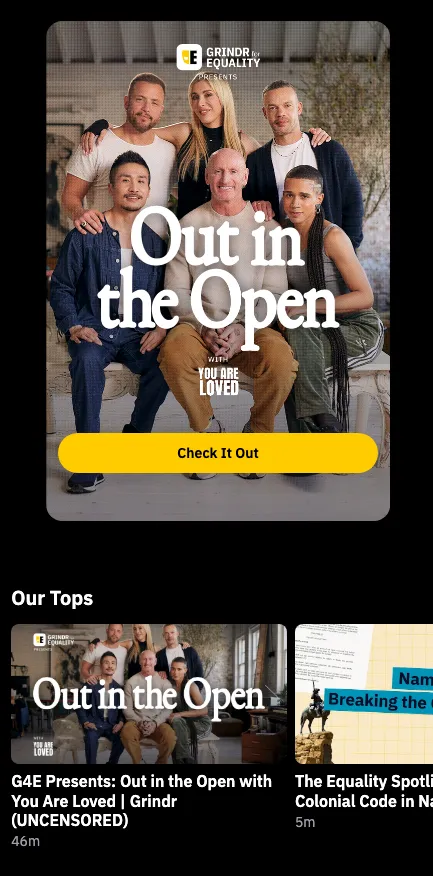
Grindr Presents is the content hub inside the Grindr app: original series, artist behind-the-scenes videos, culture stories and playlists.1, 2 It launched on August 7, 2025.1 Brand marketing brought the brief. I defined the product, and built it, in under a month.
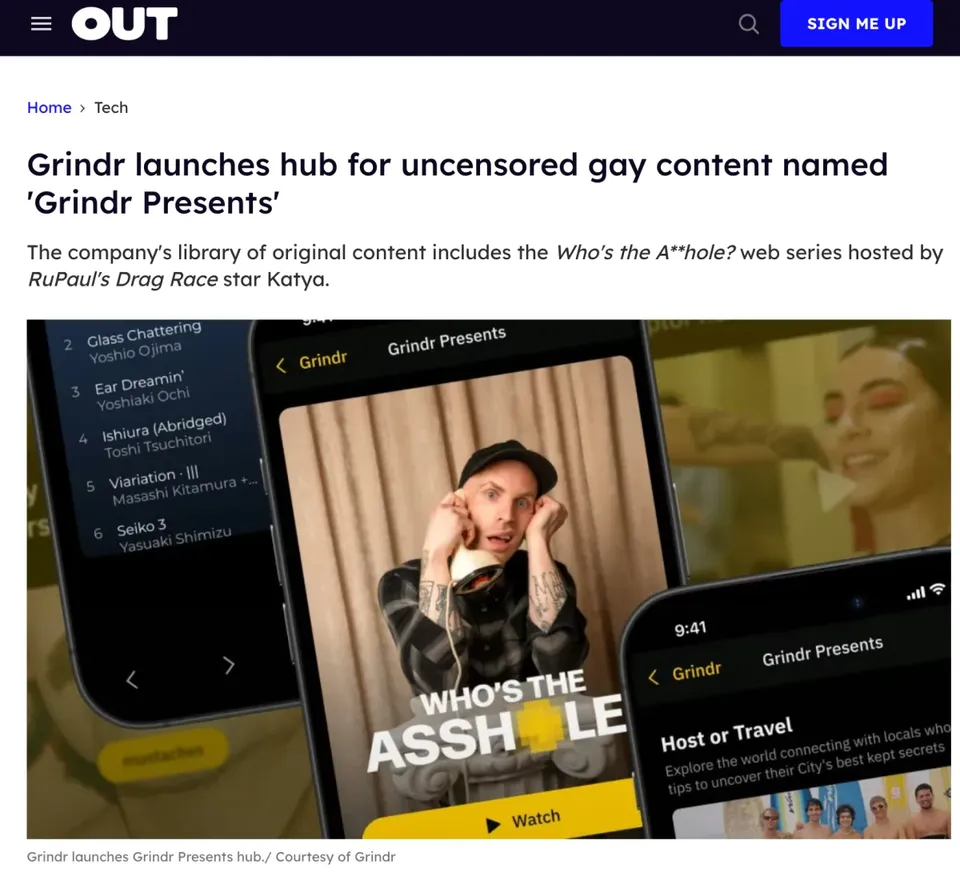
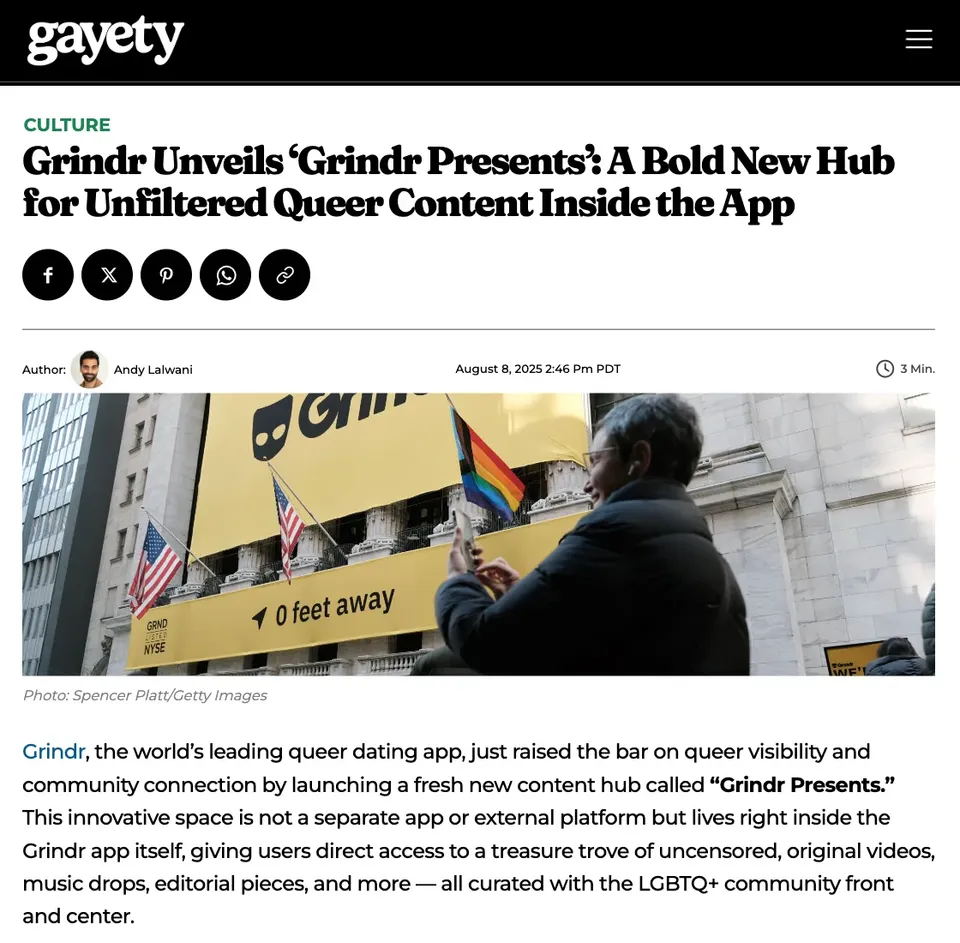
In the press
The problem
Grindr was already making original video. Series like Who’s the Asshole? with Katya, Daddy Lessons and Host or Travel ran on YouTube and Instagram, often in edited cuts to fit those platforms’ rules.2 Watching them meant leaving the app.
The brief was to bring that content inside Grindr, uncut, so people could watch without leaving the app.2
What I did
- Defined the product. What the hub is, its sections, and how series, videos, stories and playlists are organized.
- Designed it. Layouts, cards, carousels, and video and playlist patterns.
- Built it. Webflow plus custom JavaScript and CSS, the same stack as Grindr.com, loaded in a webview inside the iOS and Android apps.
- Set it up. New shows, playlists and stories go in through the Webflow CMS, with no engineering needed.
Making a webview feel like the app
A webview that feels like a website breaks the experience. Three things kept Grindr Presents feeling native:
- App-like UI patterns. Horizontal carousels and cards that match how the rest of the Grindr app looks and moves.
- No browser chrome. Grindr’s native header and toolbar wrap the webview, and the page inside shows no URLs, no links out and no page reloads.
- Fast loading. Light pages, so the hub opens the way a native screen would.
A custom video player
YouTube’s embedded player worked against the brief. It carries its own interface and suggested videos that pull people toward YouTube, and it doesn’t give us control over sound on autoplay.
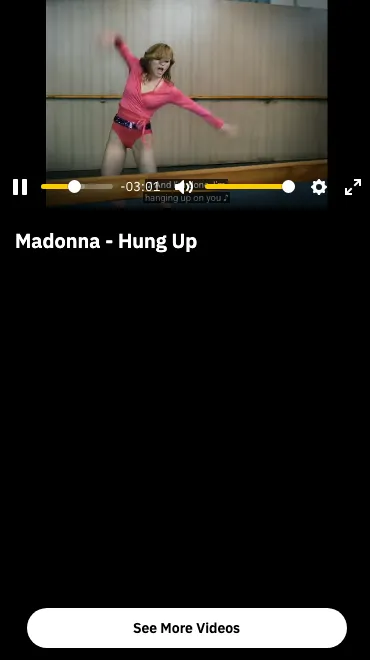
Soooooo I built our own player (using Plyr, an open-source HTML5 player library).3 It let us:
- Keep people in Grindr. No YouTube interface, no suggested videos, no links out.
- Brand it. Grindr’s logo and colors on the controls.
- Handle autoplay with sound. Browsers block video that autoplays with sound unless the user has interacted with the page.4 The player tries for sound, and where a browser blocks it, it shows a branded tap-to-unmute button over the video.
For the Madonna livestream in 2026, I rebuilt the player for live video. See Madonna live in NYC.
Outcome
- Grindr Presents launched on August 7, 2025, with original series, artist behind-the-scenes videos, culture stories and playlists.1, 2
- The brand team publishes to it on their own through the CMS.
- It became the in-app home for the Madonna livestream in June 2026.
What I’d do differently
Measure engagement from day one. I’d instrument watch time and return visits at launch. The hub met the brief, but without that data it’s hard to show how much time it kept users inside the app.