I was Medal's founding designer. I built the brand, designed the product across platforms, and hired and led a small team. Medal reached 2.4 million gamers in my first two years.
Medal lets gamers capture the best moments of their games and share them. I joined the founding team in 2017, a small team of fewer than six, as Medal’s first designer.
From 2017 to 2020 I built Medal’s brand from nothing, designed the product across desktop, web, iOS and Android, and hired and led a team comprised of 2 graphic designers and 1 front-end developer.
In the press
The problem
Medal’s early idea was simple: capturing the digital world should be as easy as capturing the real one.1 A gamer’s best moments happen in a game, but recording them meant heavy capture tools, full-session recordings, video editing and manual uploads. Sharing a clip took longer than the moment itself.
Current solutions like NVIDIA’s ShadowPlay, XBOX’s game bar, and other smaller startups just didn’t quite hit it: performance issues, community dis-engagement, lagging experience, etc.
One button to capture
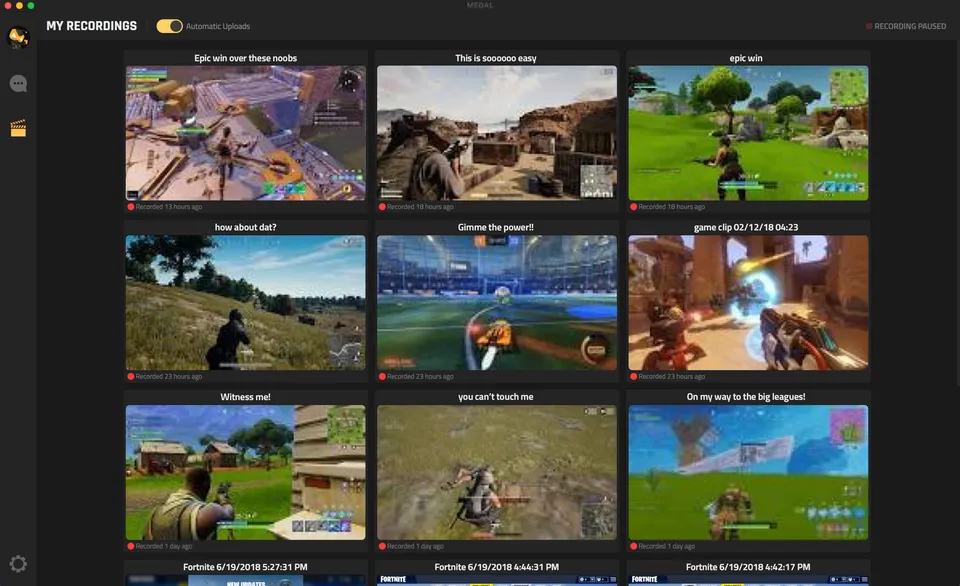
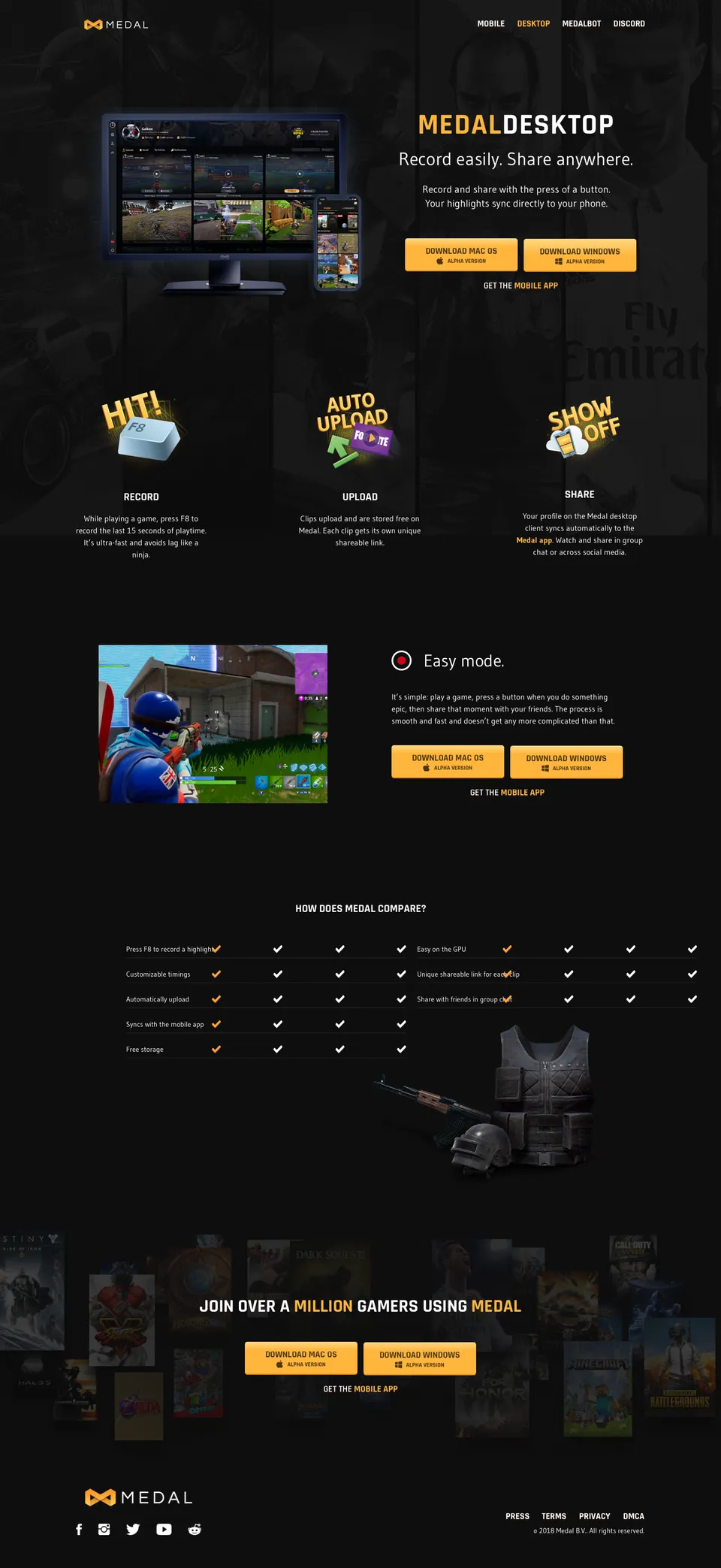
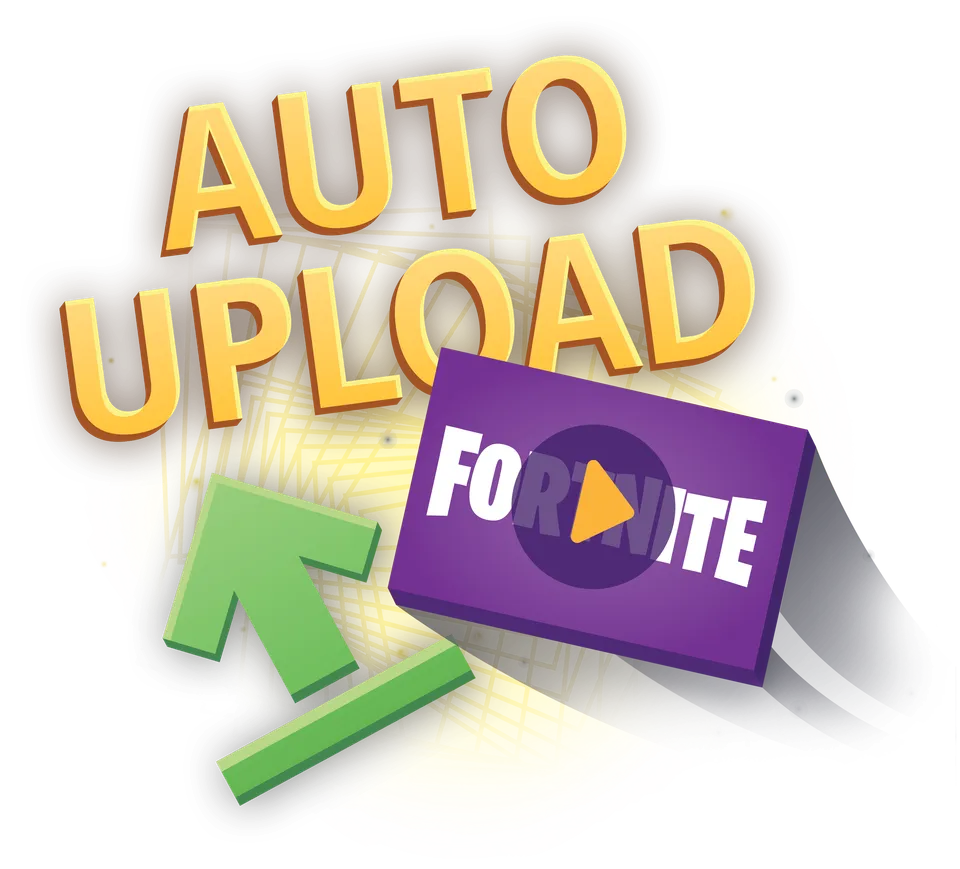
The core product was a desktop recorder. A player opens their game and plays. When something great happens, they press F8, and Medal saves the last 15 seconds, uploads it to the cloud, and creates a link for gamers to share. No editing, no configuration, no manual upload.1, 2
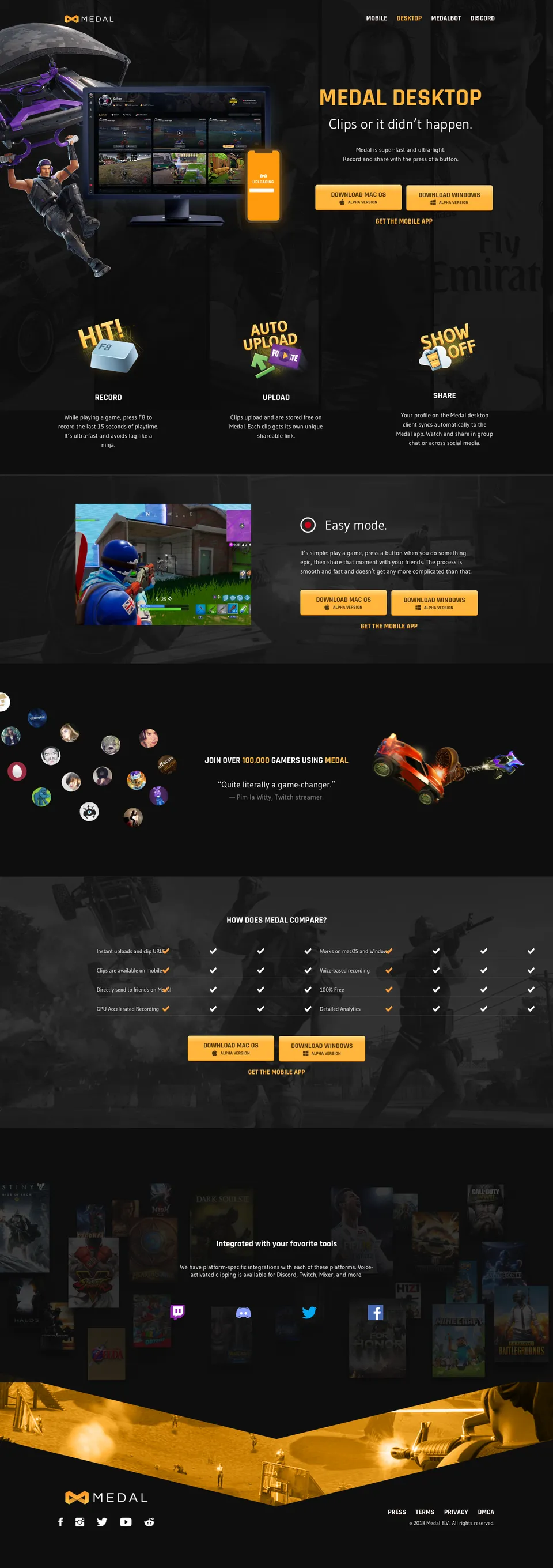
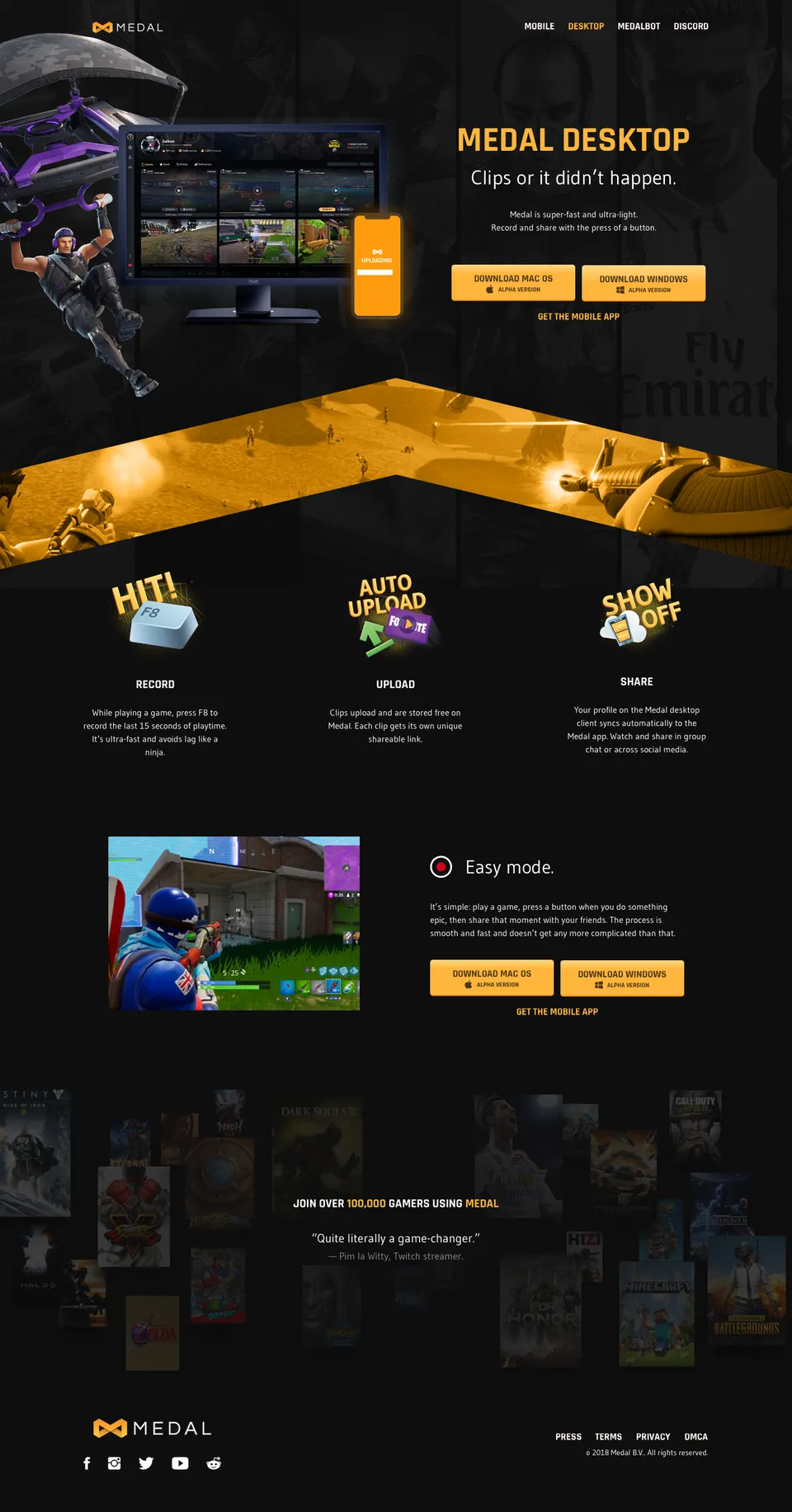
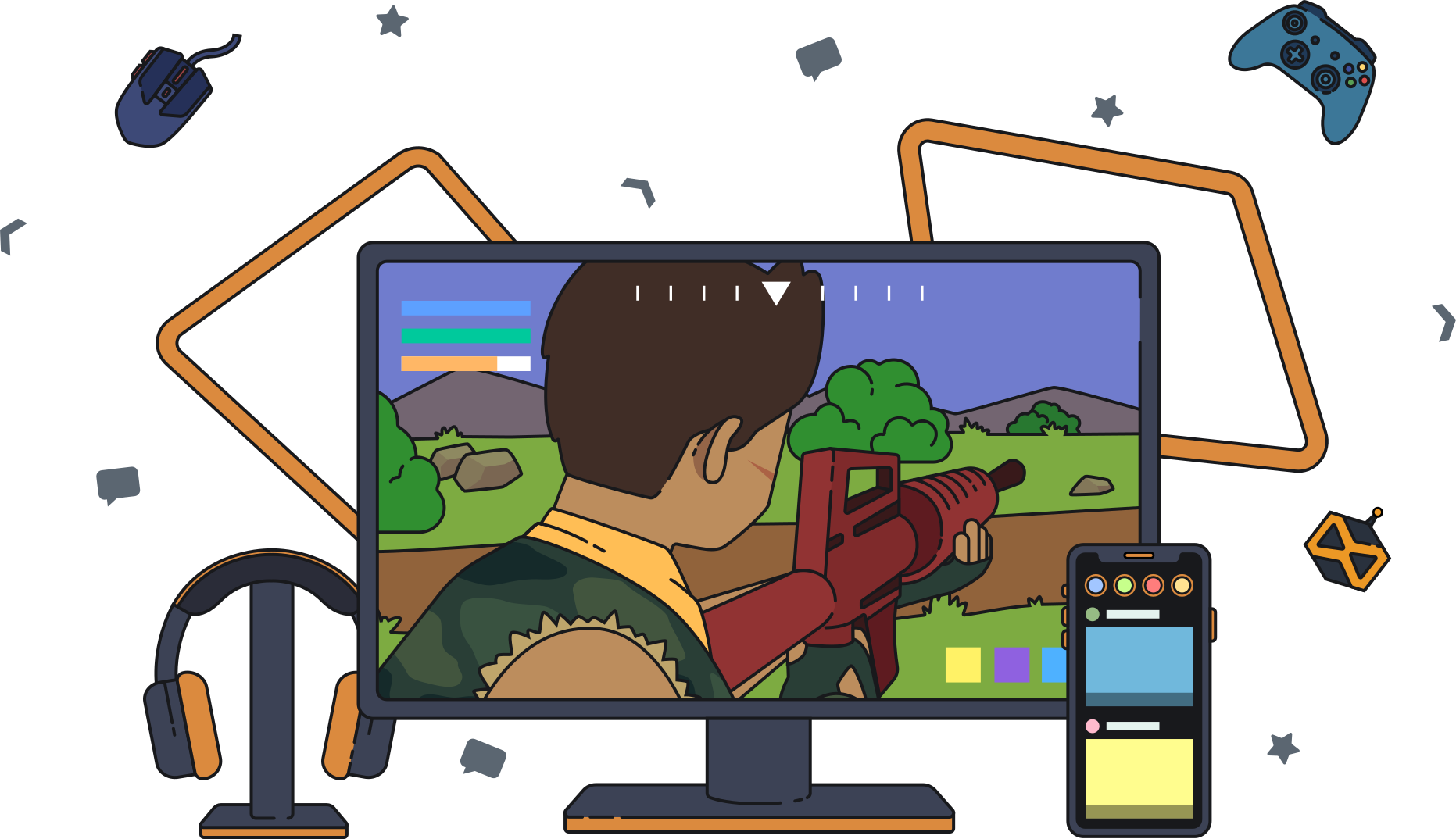
I designed the recorder experience and the illustration language that explained it everywhere Medal engaged with users: Hit, Auto upload, Show off.
Betting on friends over search
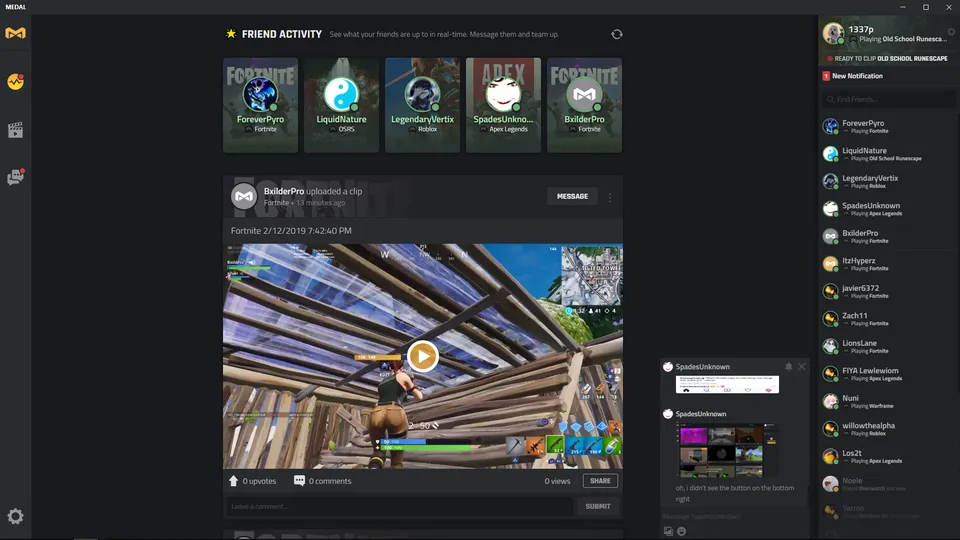
By 2019 Medal’s thesis was that “the biggest distribution platform in gaming will come through existing habits such as search and friends.”3 Medal had traction in both, yet they behaved very differently:
- Search happens weekly or monthly: finding a new game or community. It drove the most volume, about 120,000 daily users, but it’s a solo habit with weak retention.
- Friends happen daily, often several times a day. It drove far fewer daily users, 10,000 to 15,000, but they stayed, and it could scale through invites (once the flows work).
We went all-in on friends as the more valuable long-term habit, yet keeping up-to-date with trending games so people could discover them. I led the product design to capitalize on the social layer that made clips worth coming back for.
Designing the social layer
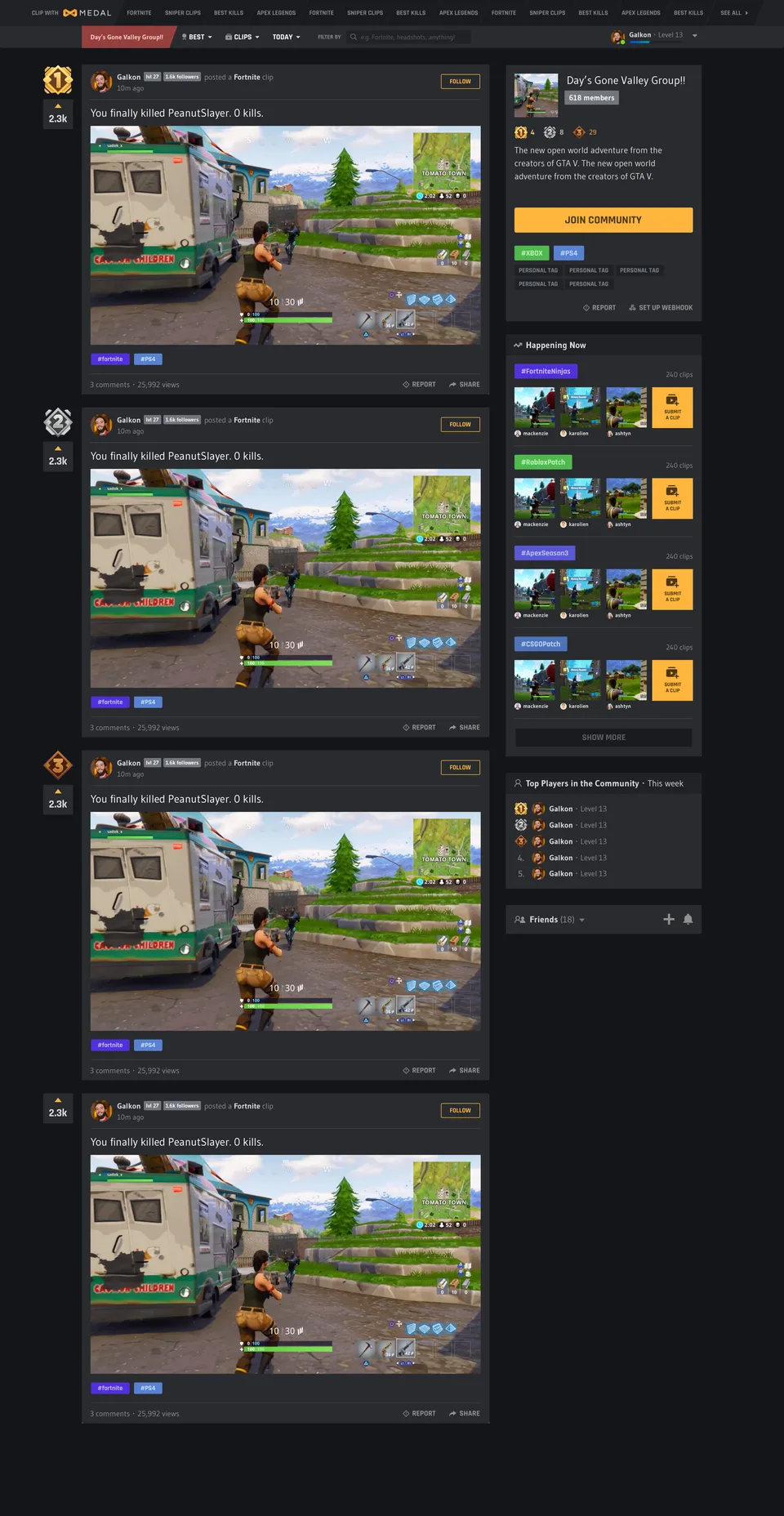
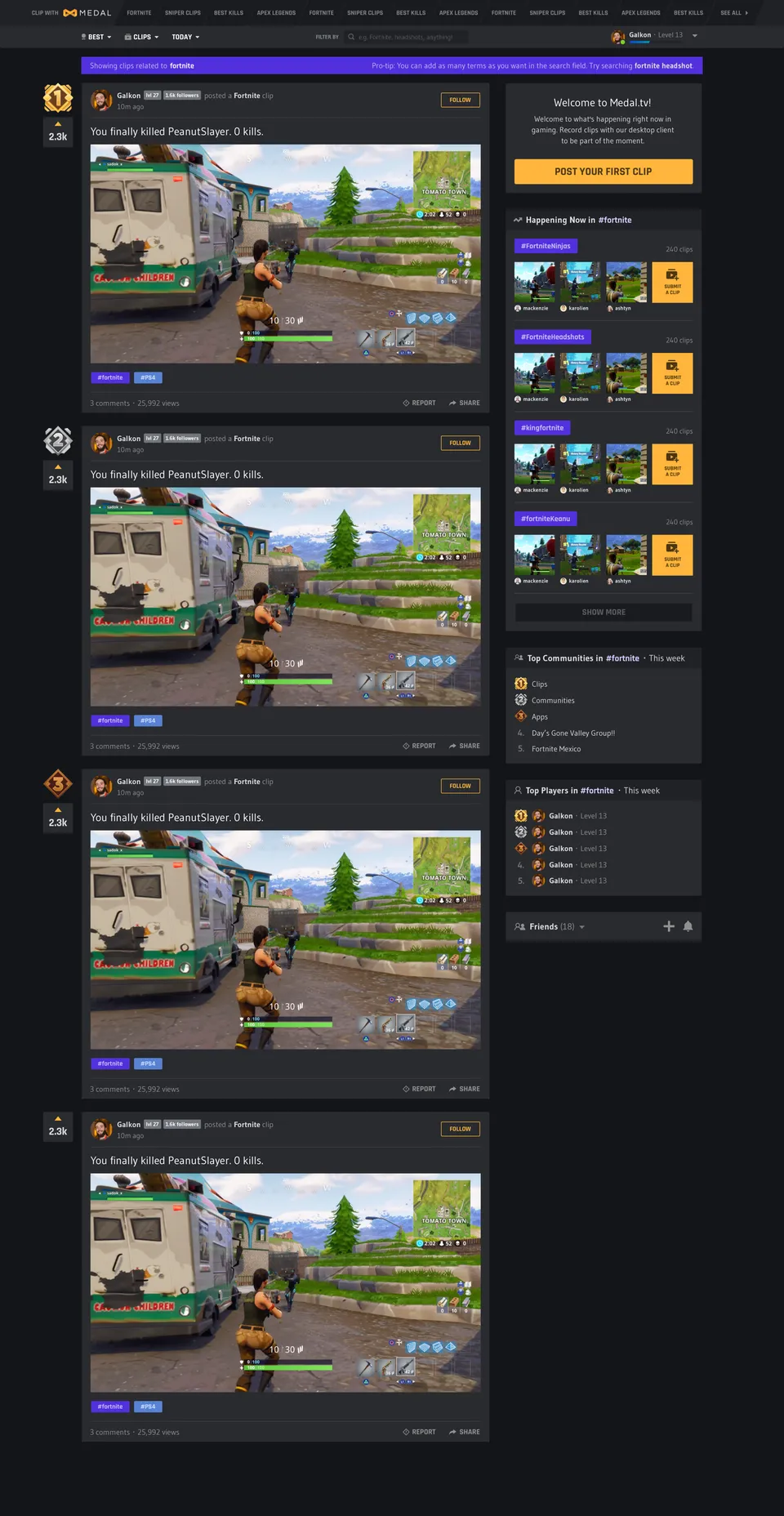
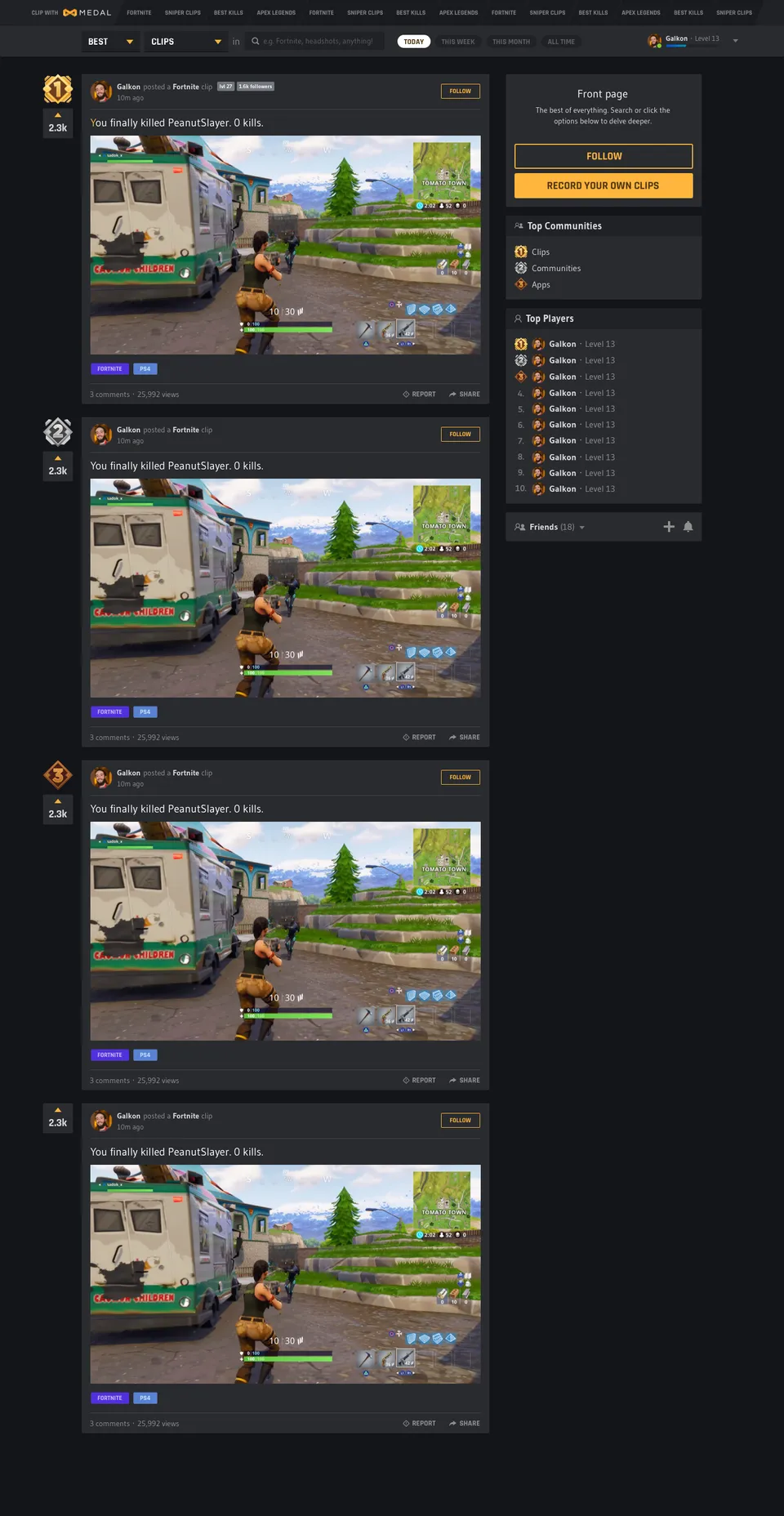
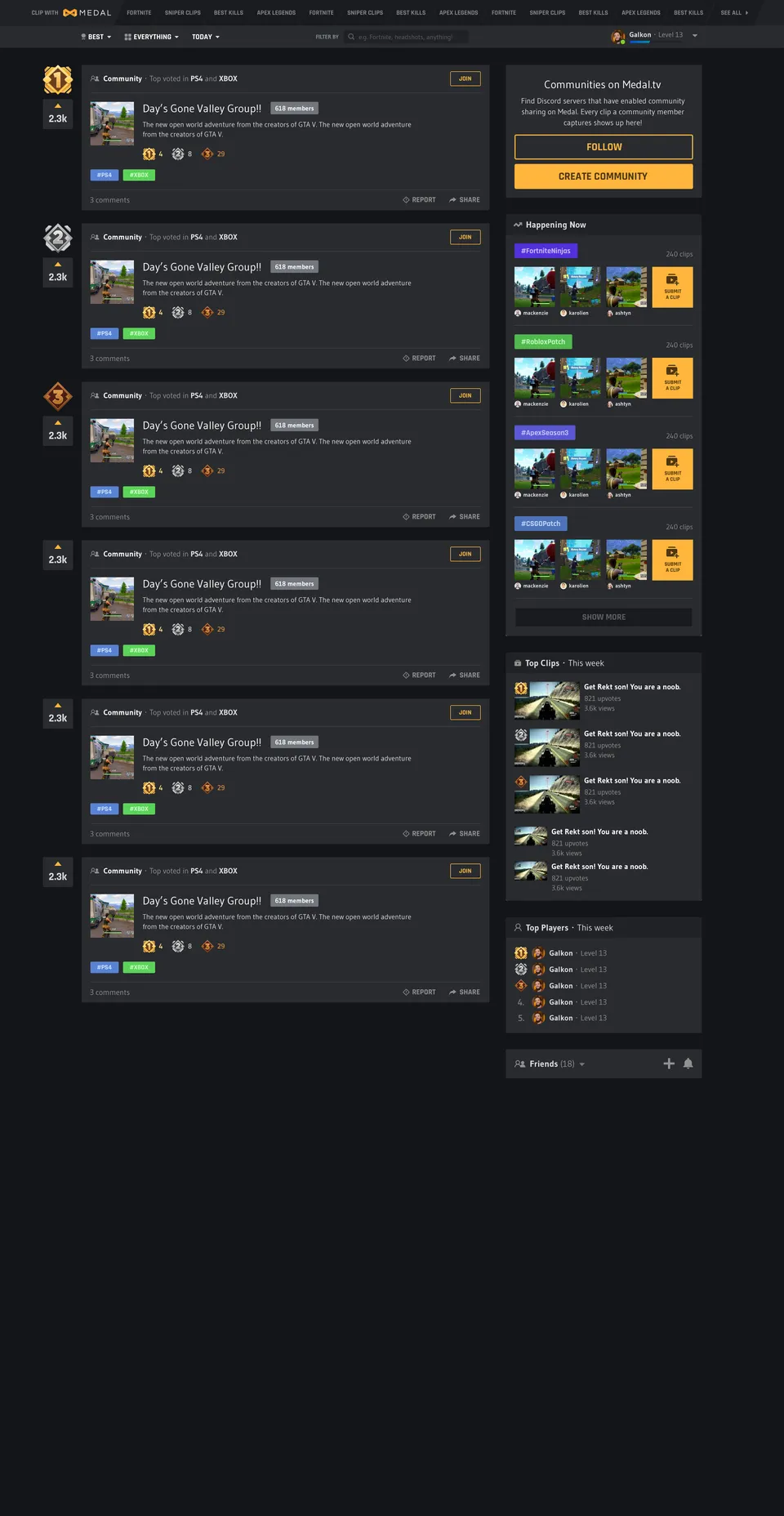
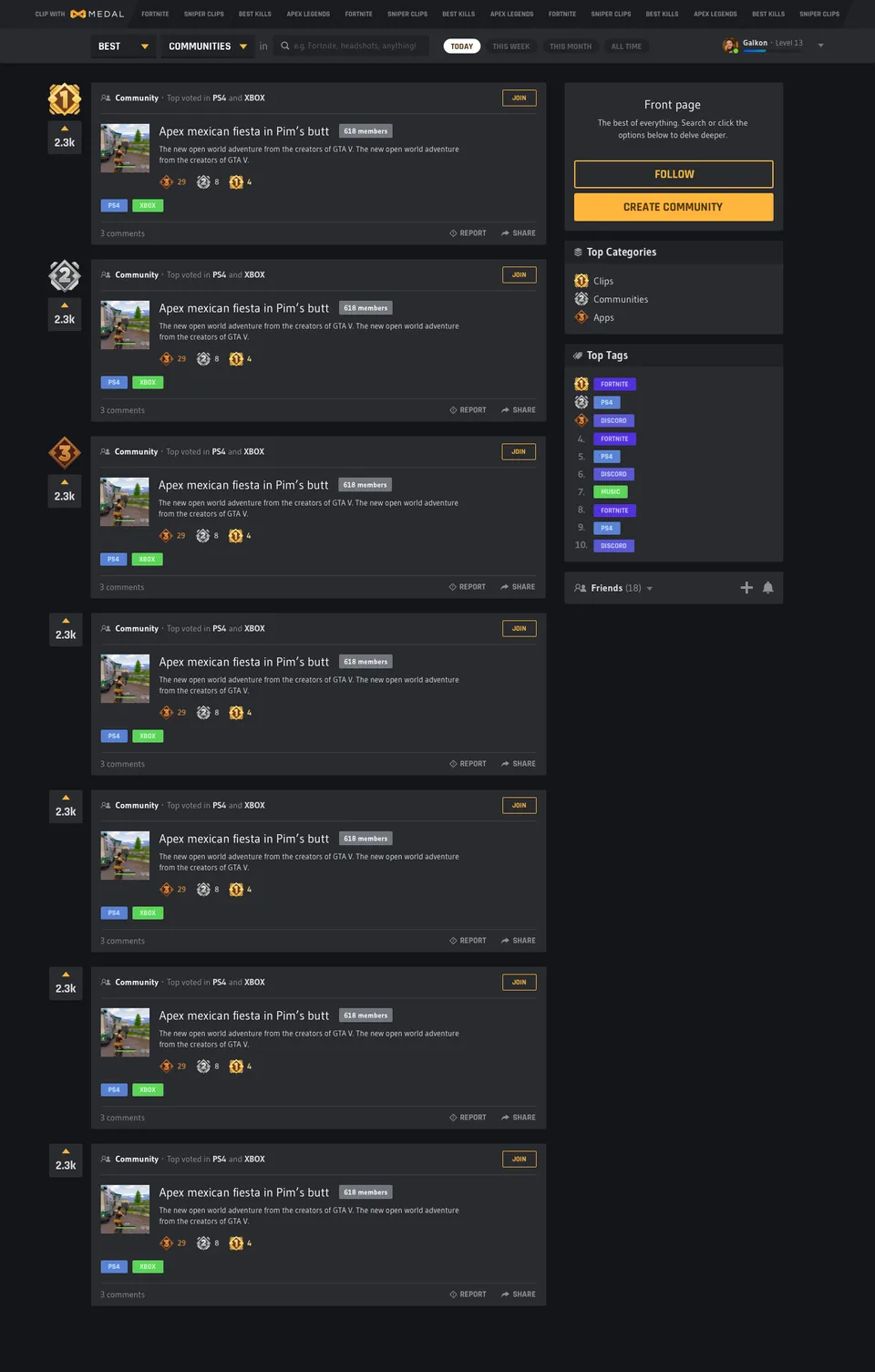
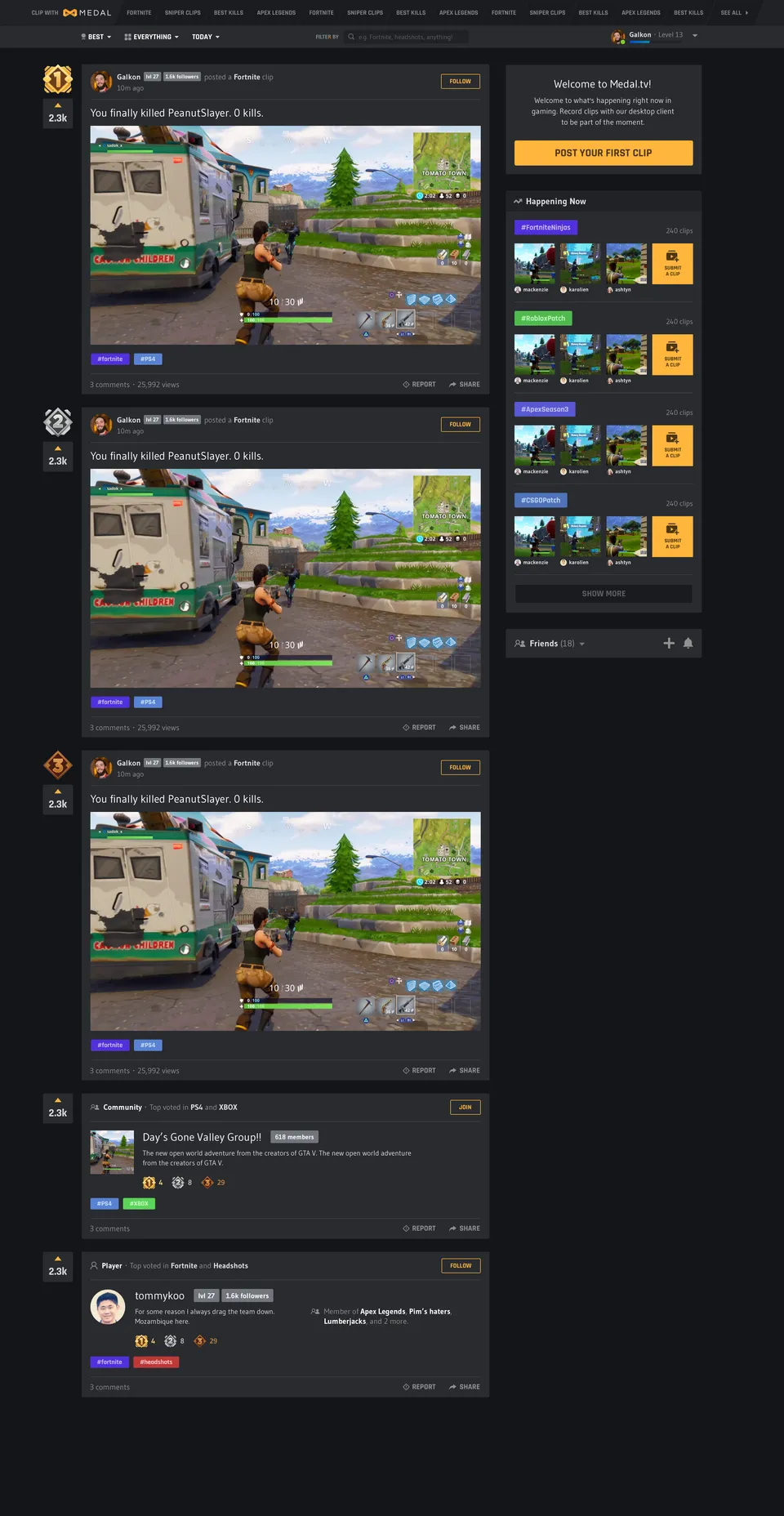
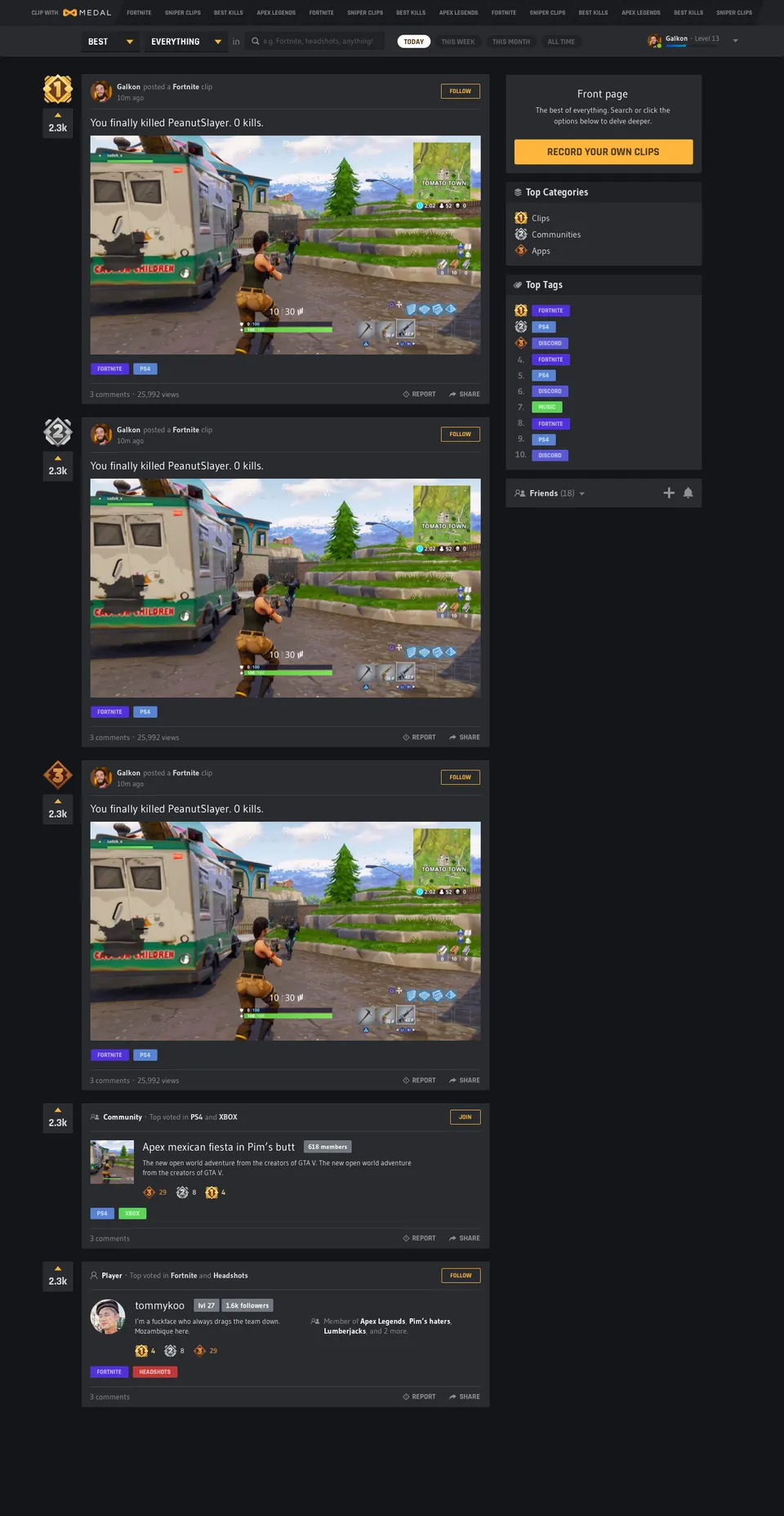
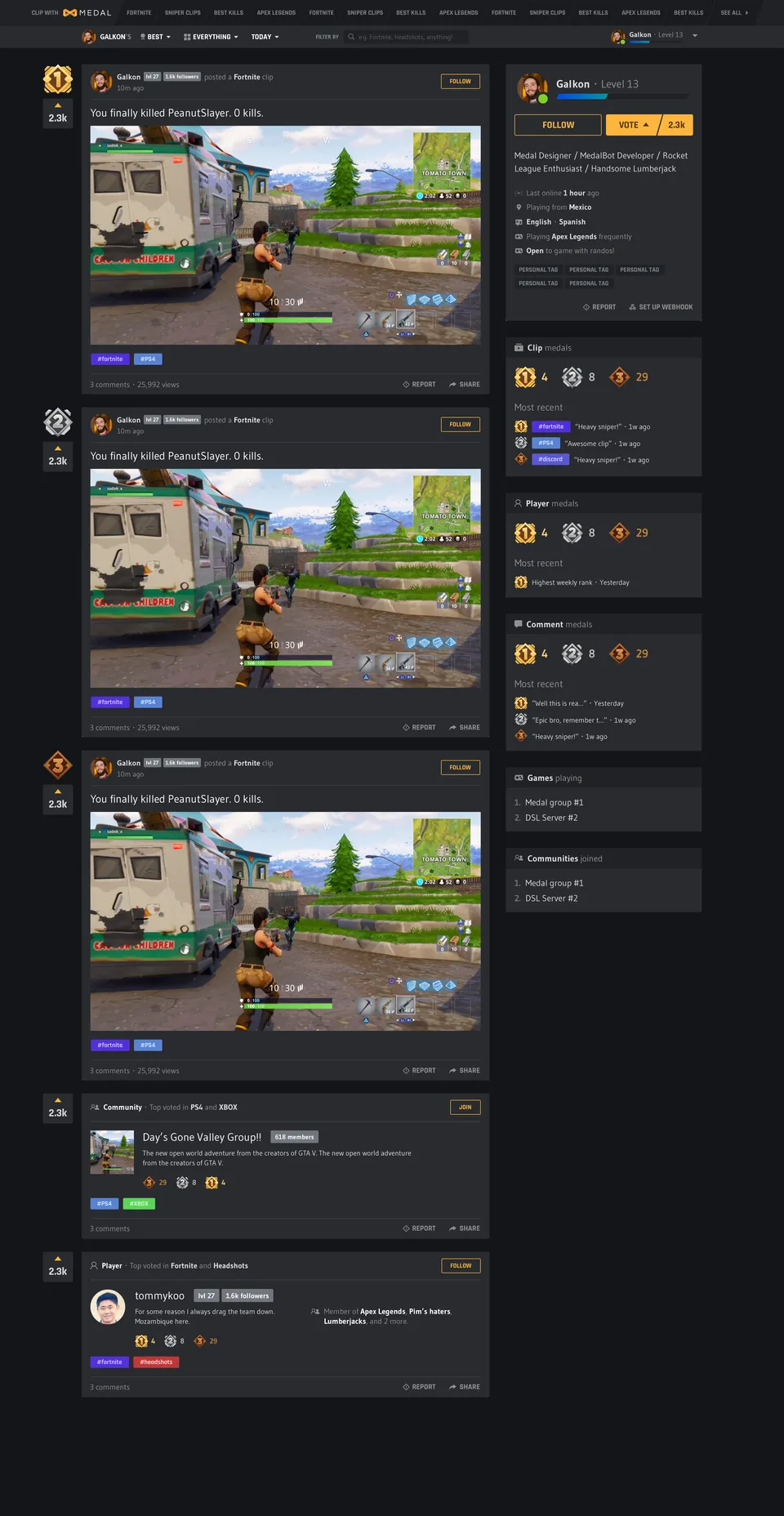
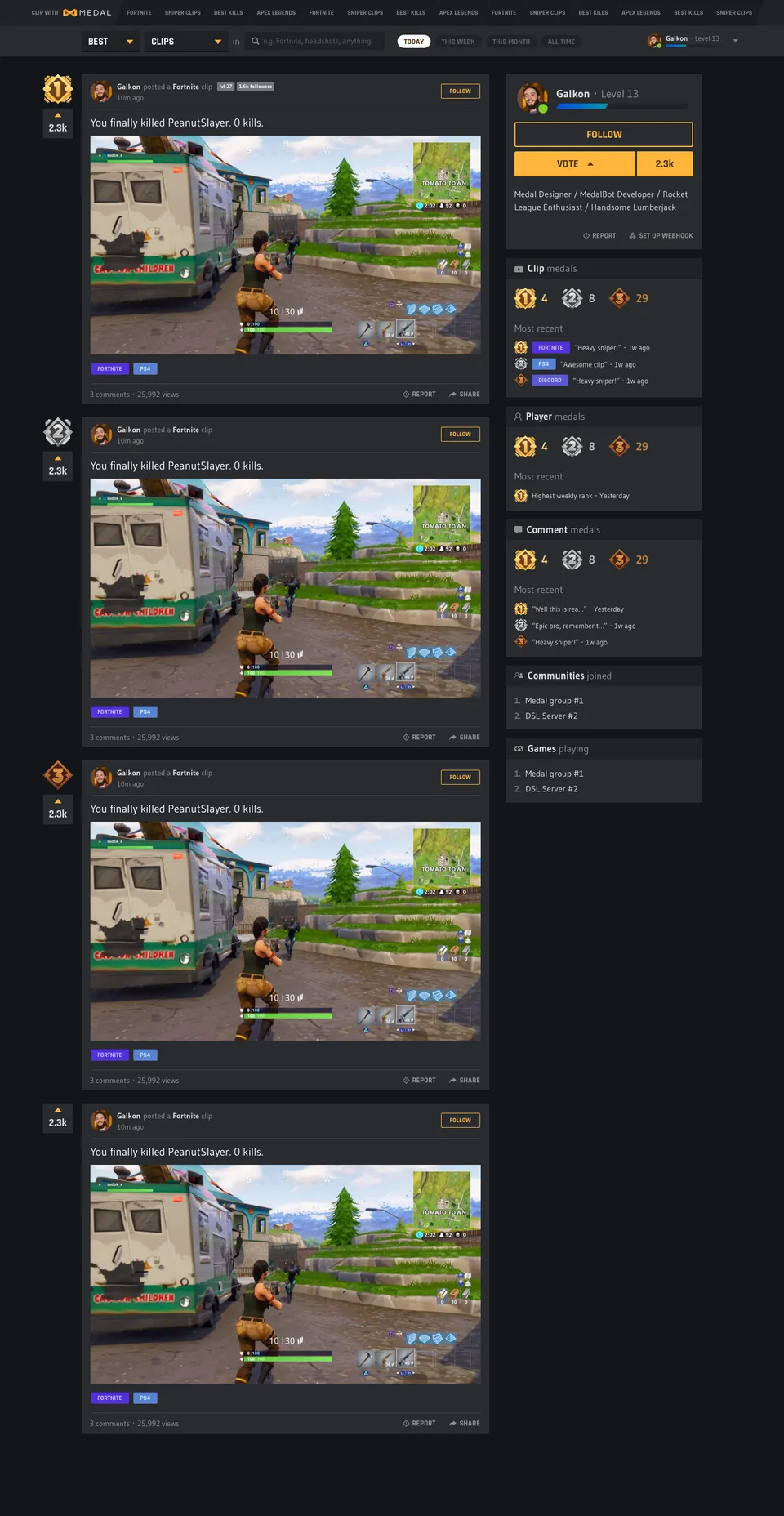
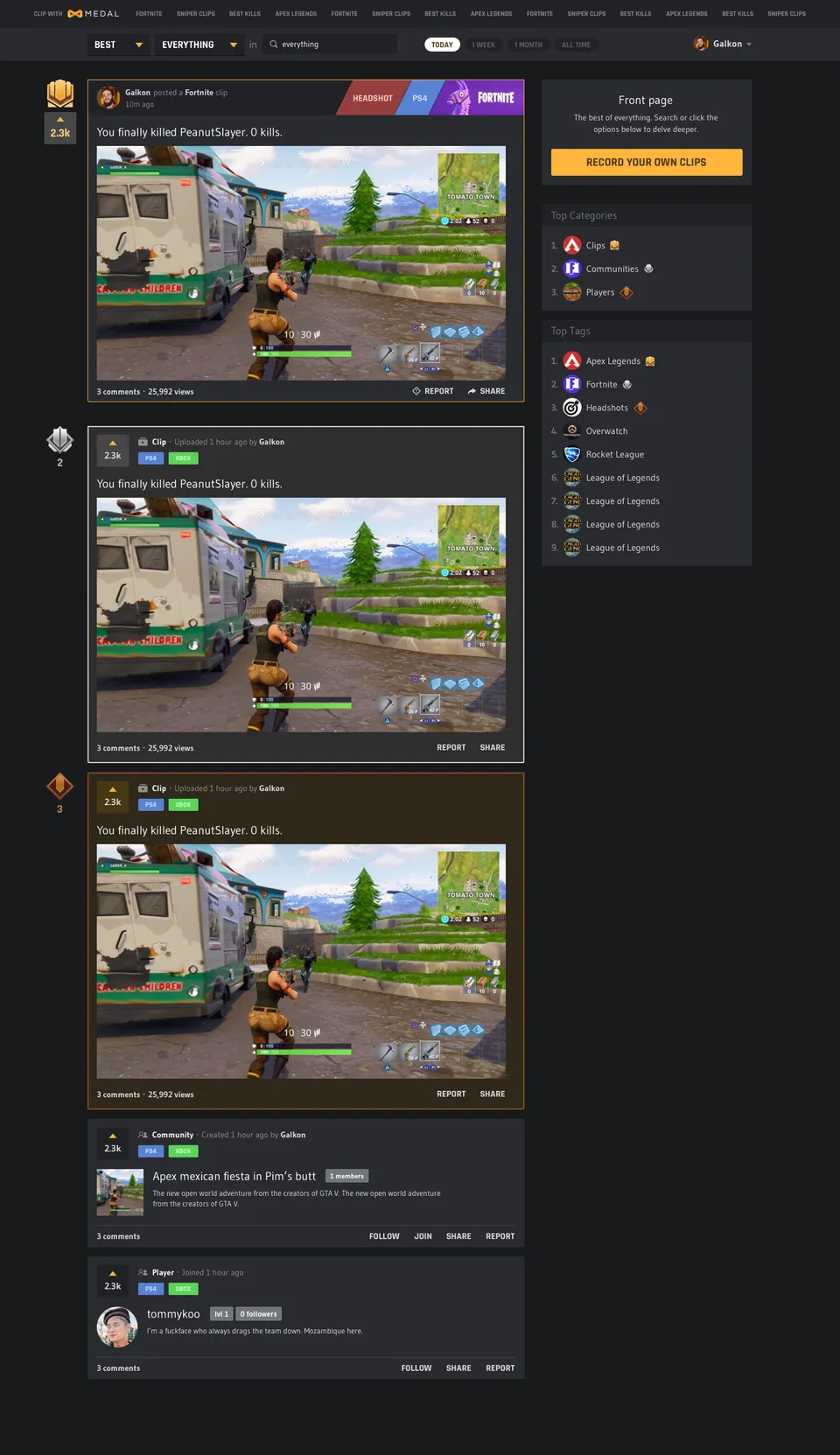
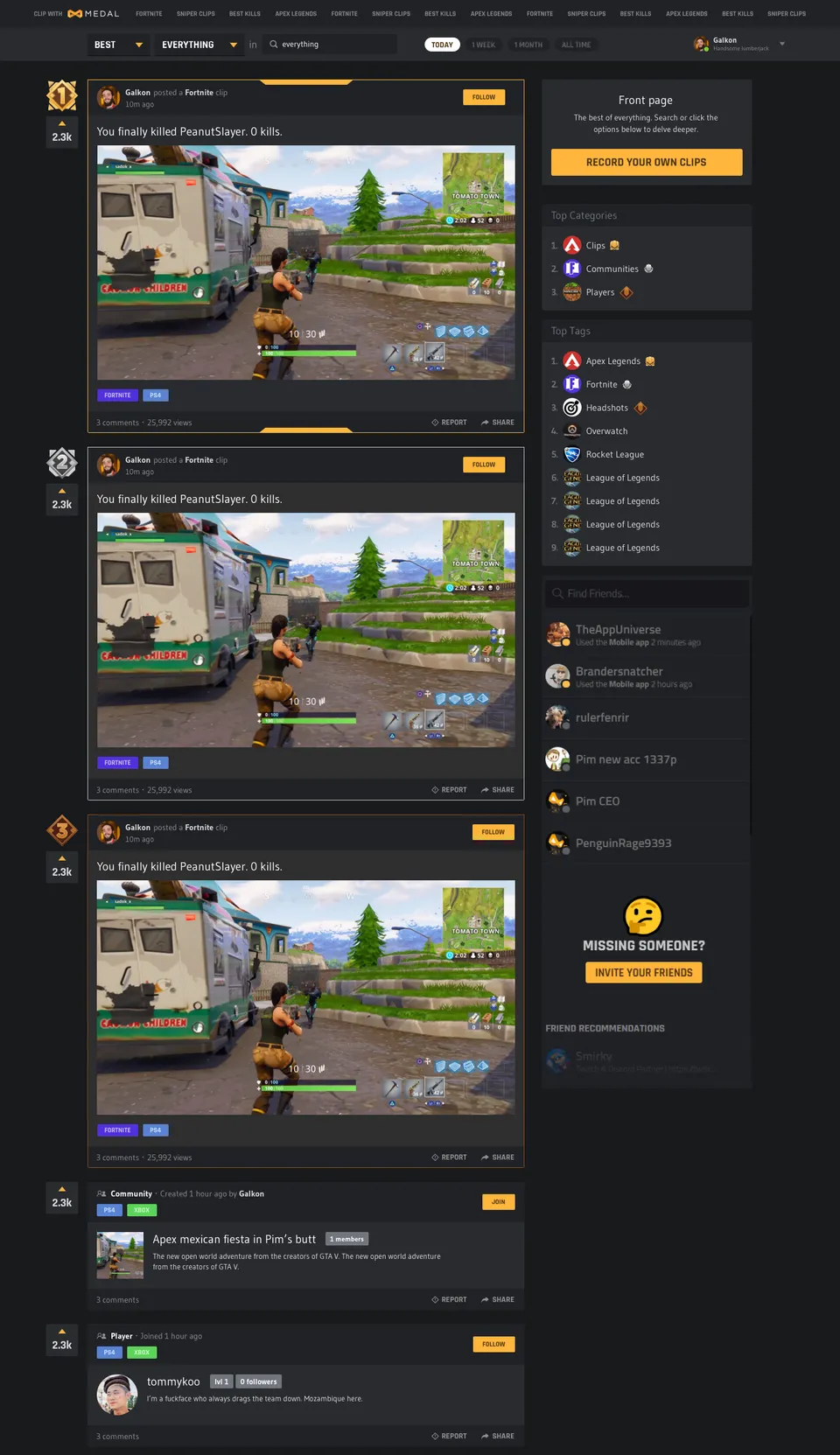
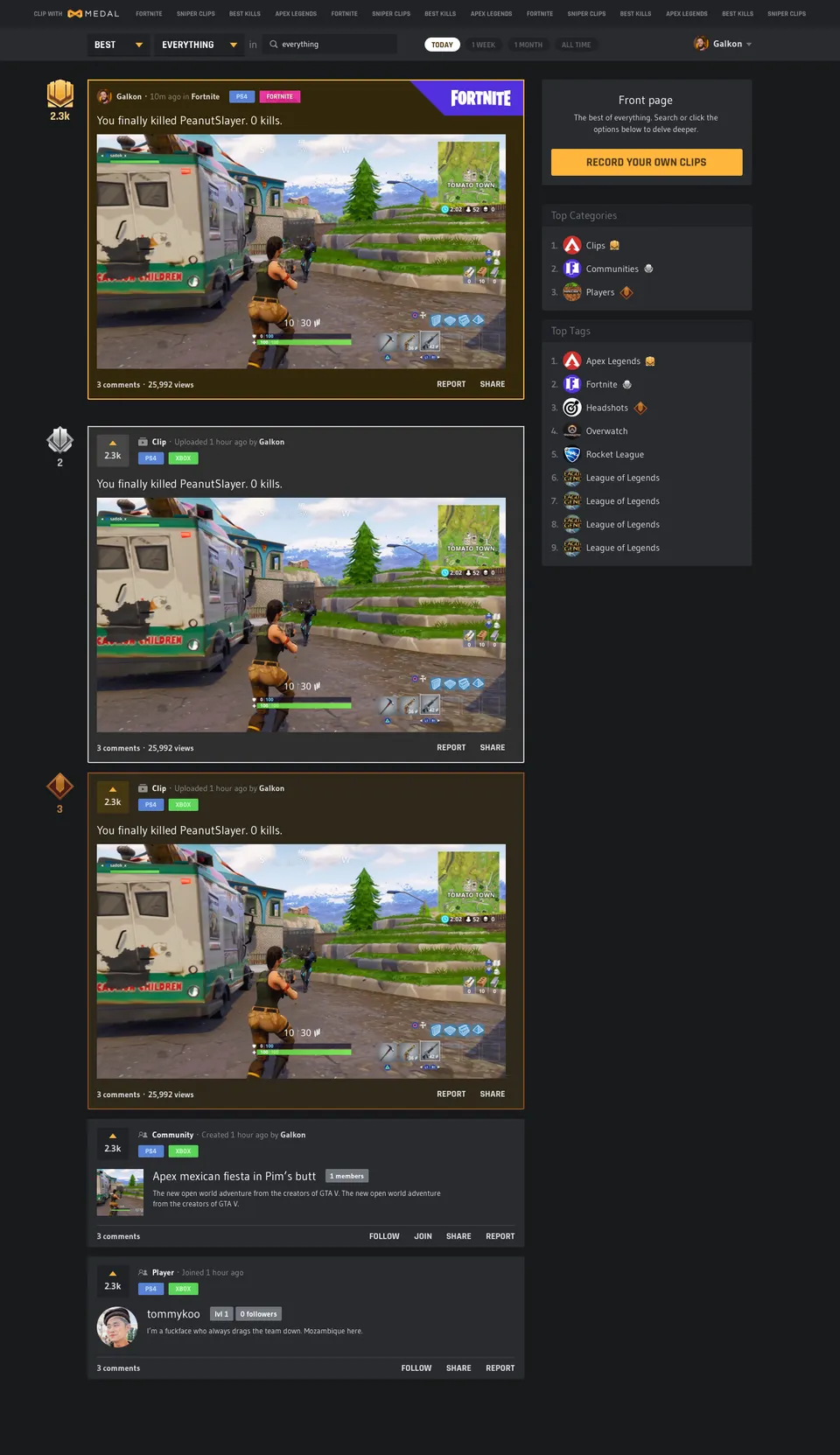
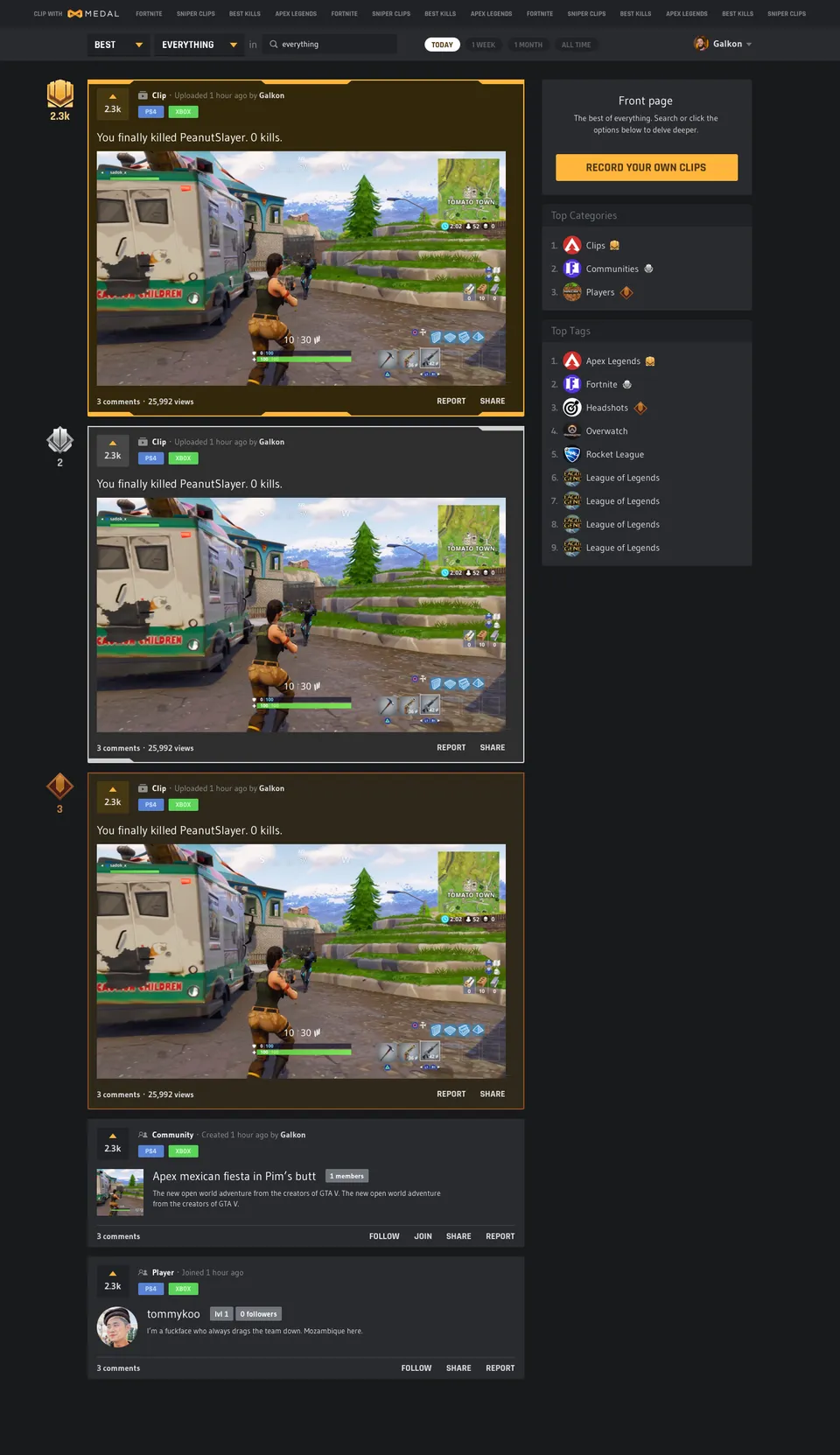
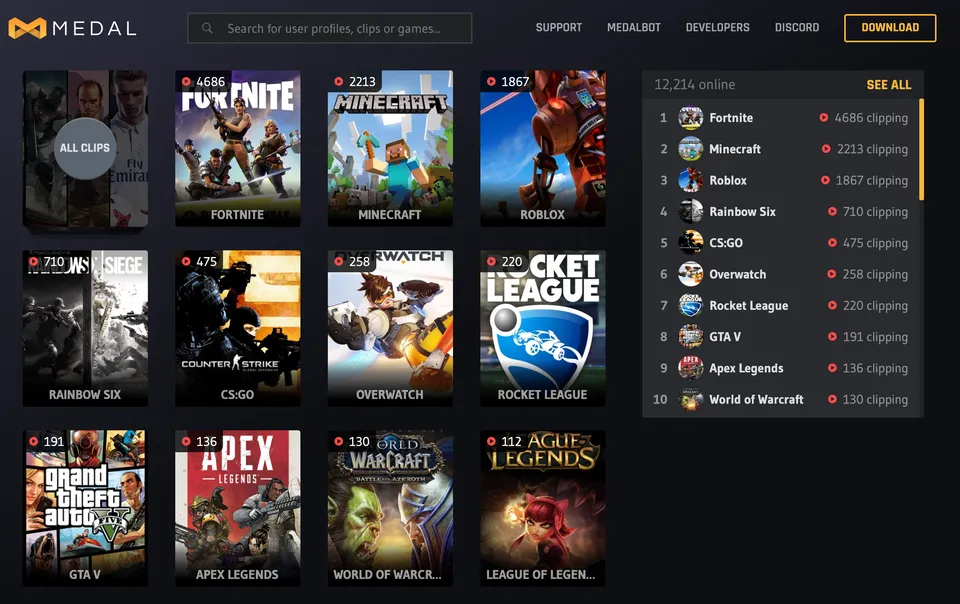
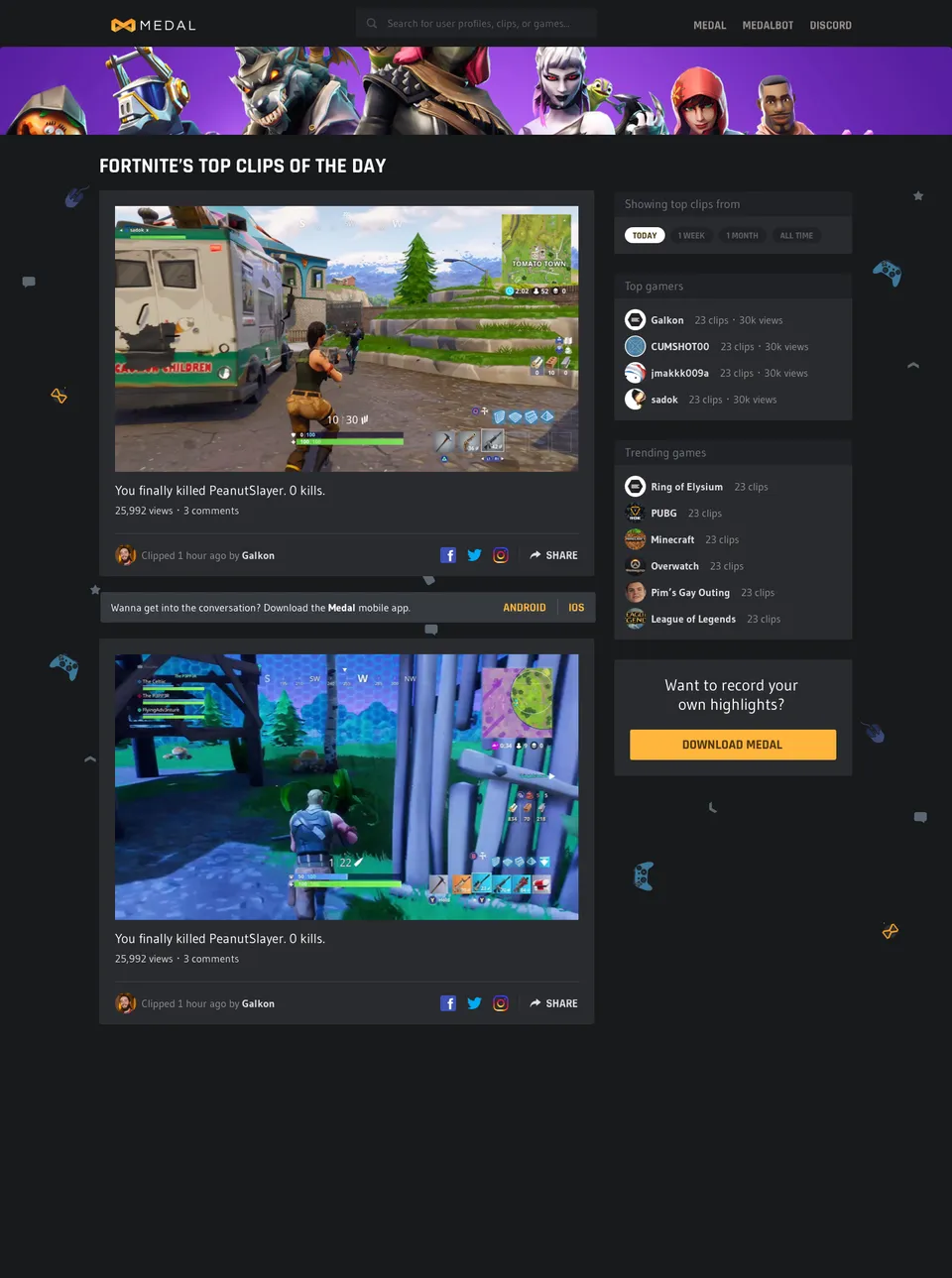
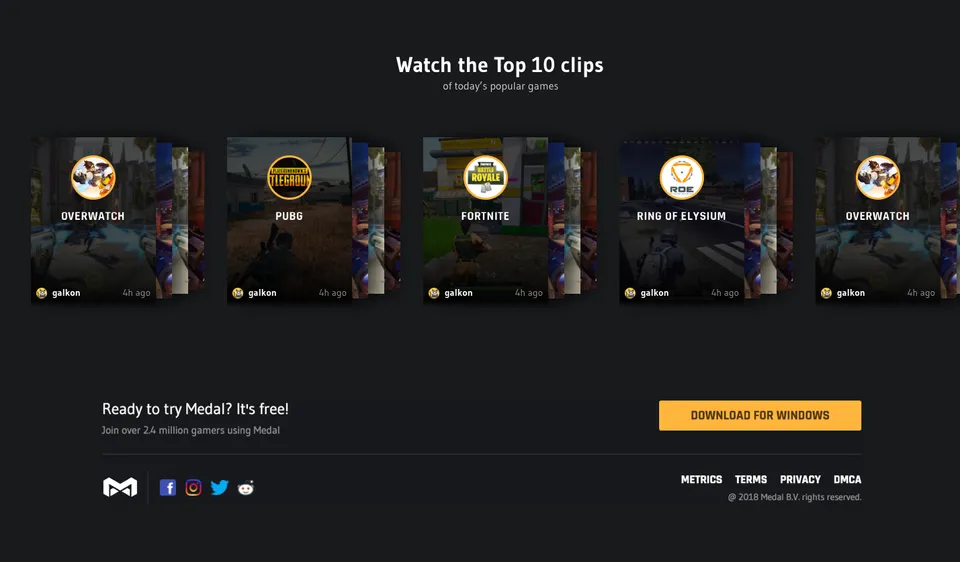
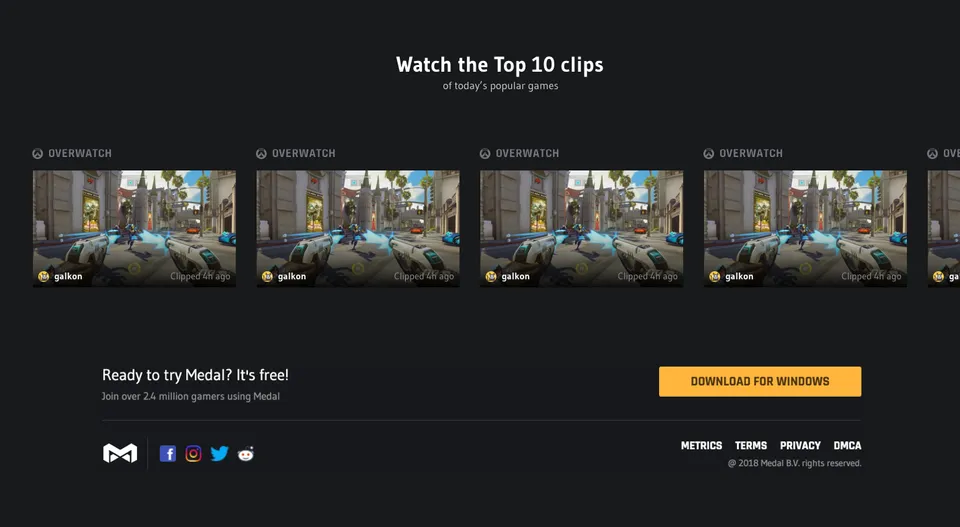
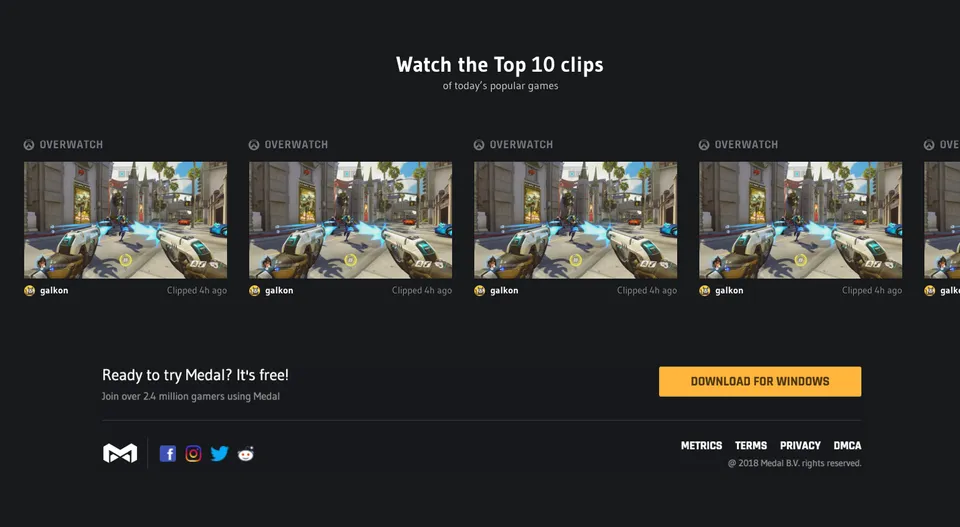
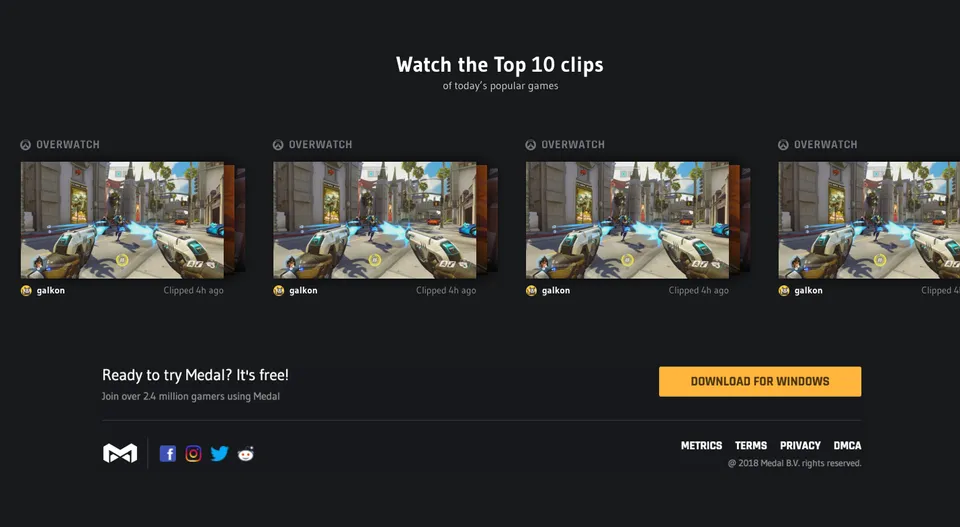
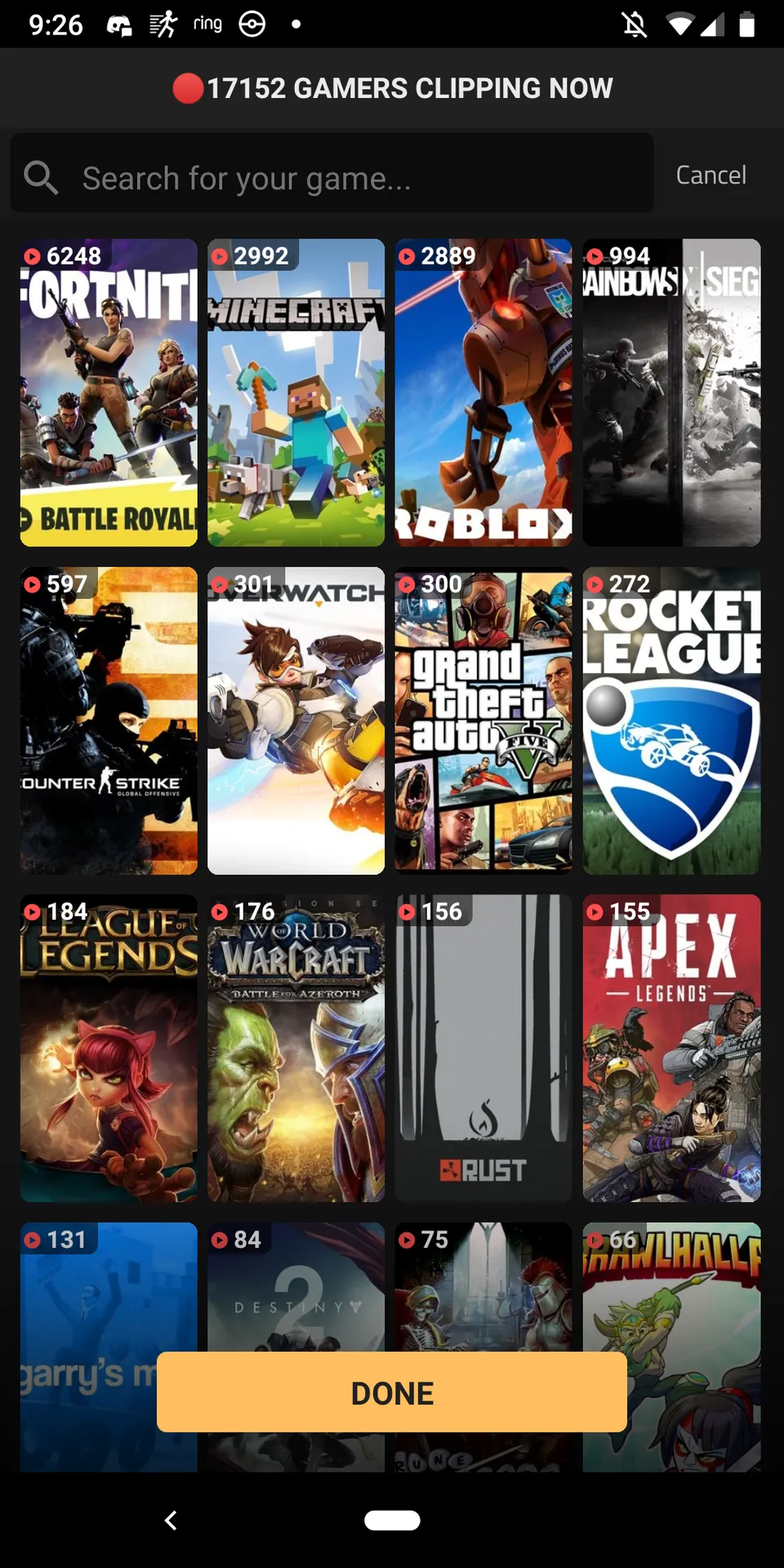
- Feeds and game communities. I organized clips around games and communities, so a player lands among people who play what they play. The web feed shows trending games, top players, top communities and live activity like how many gamers are clipping right now.
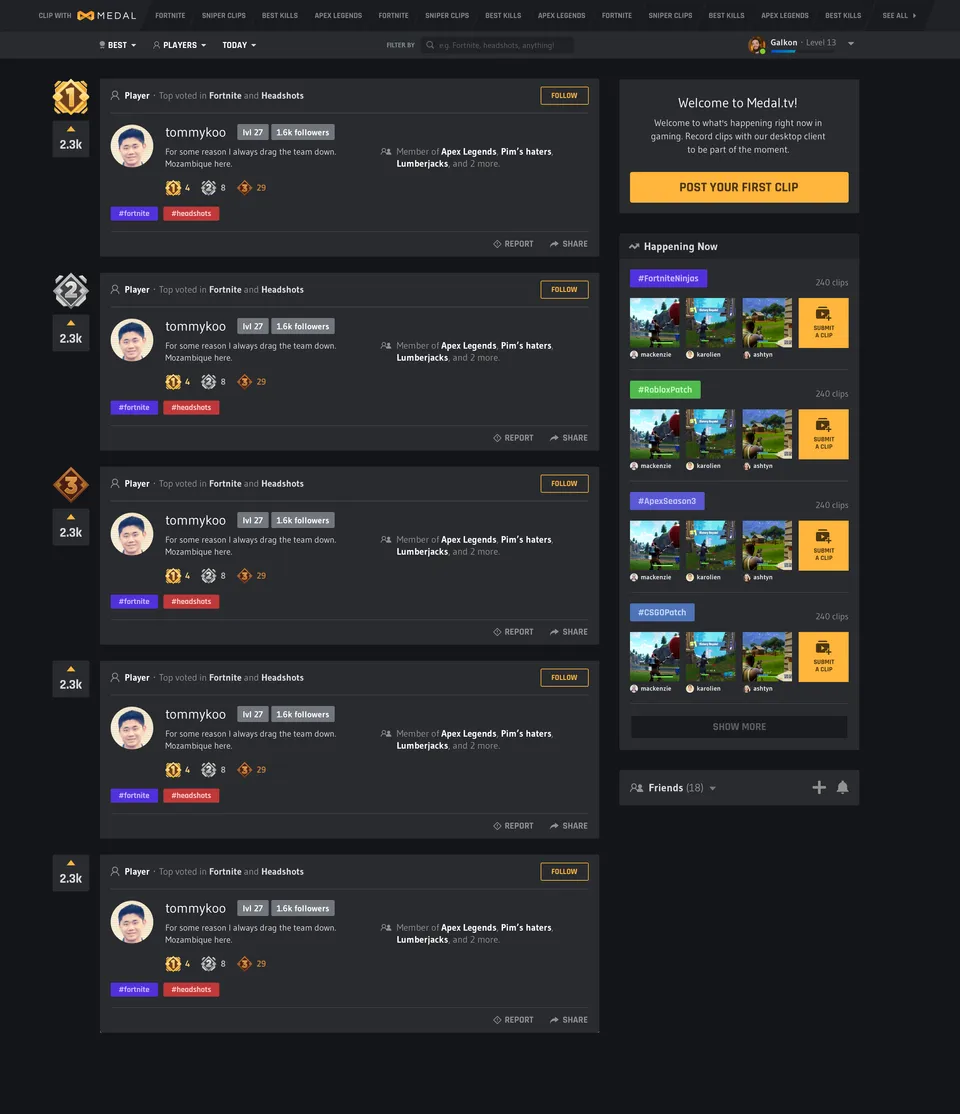
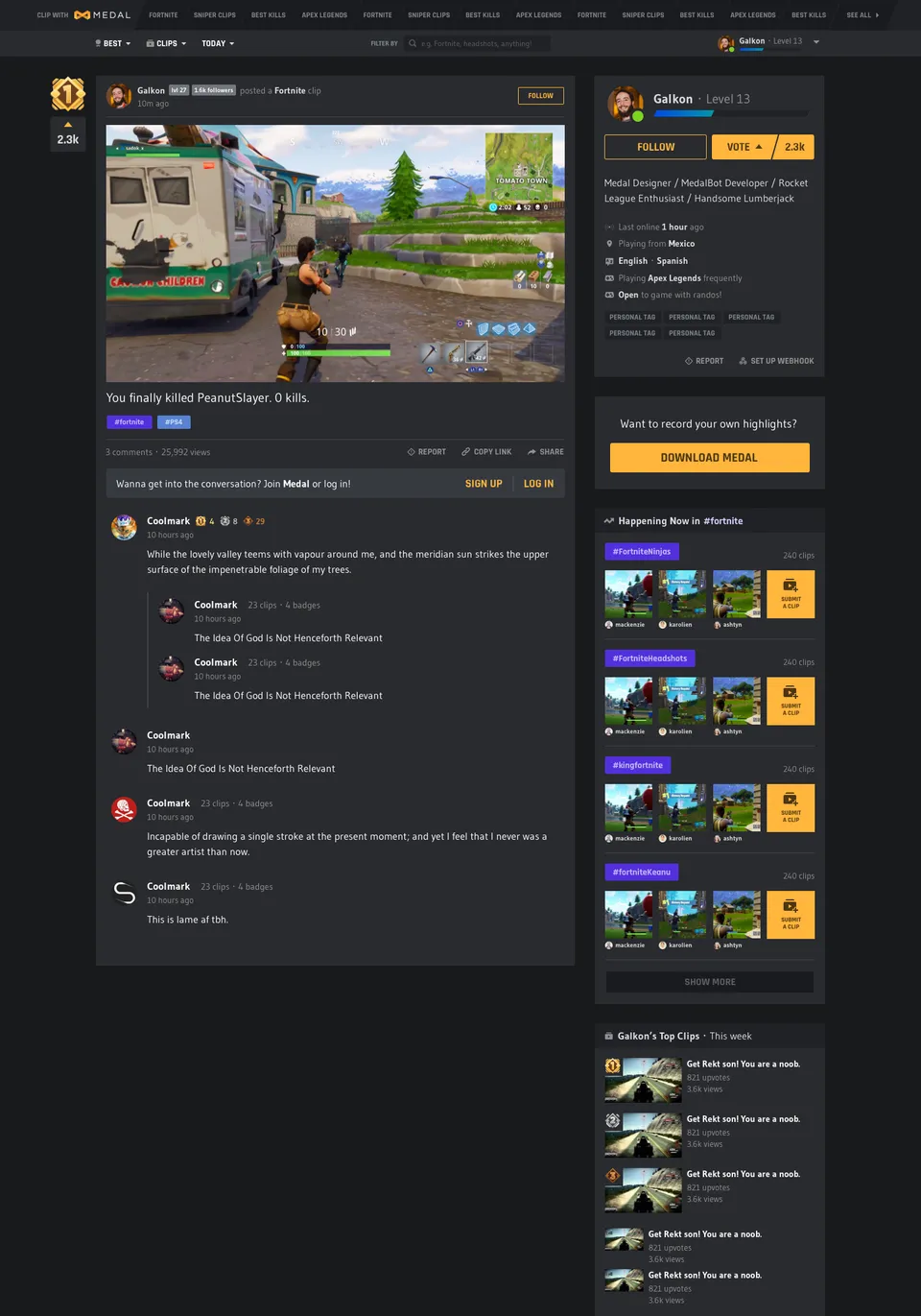
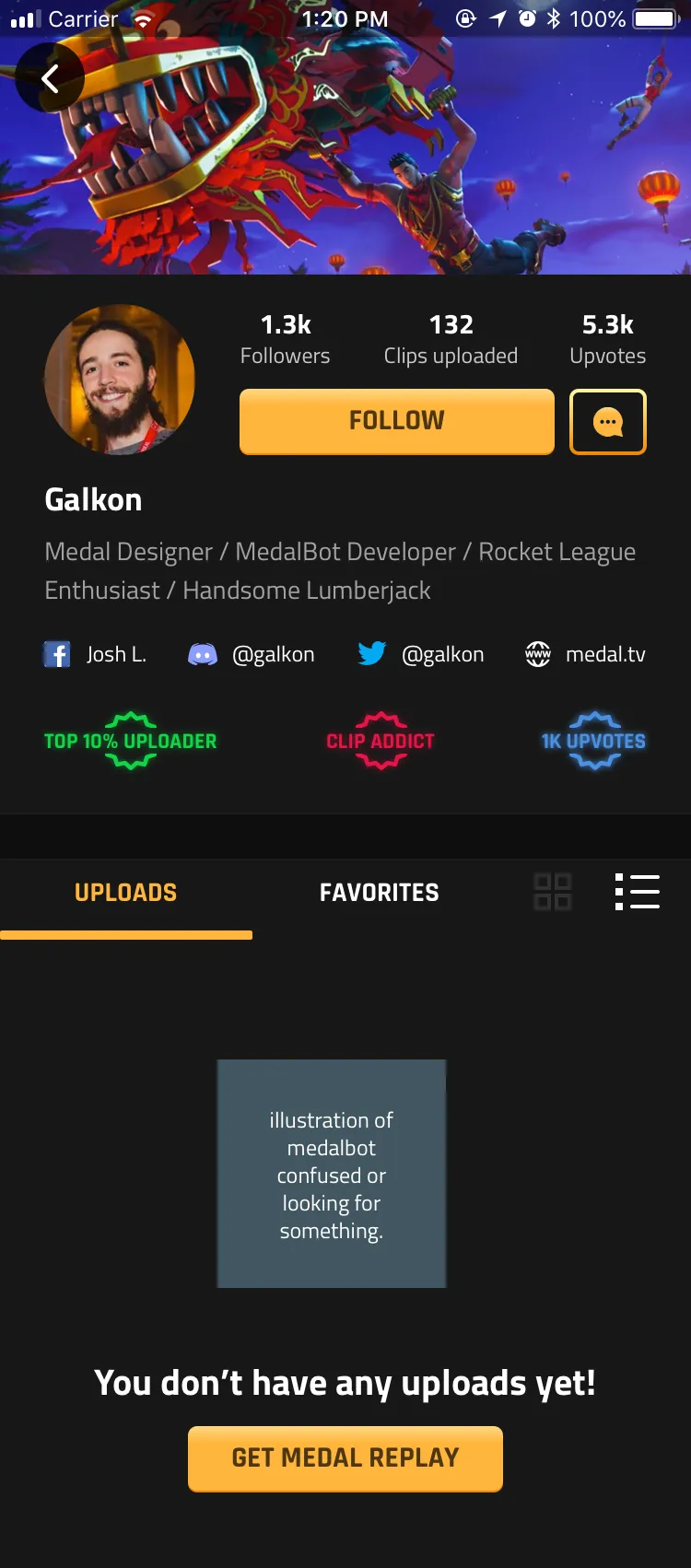
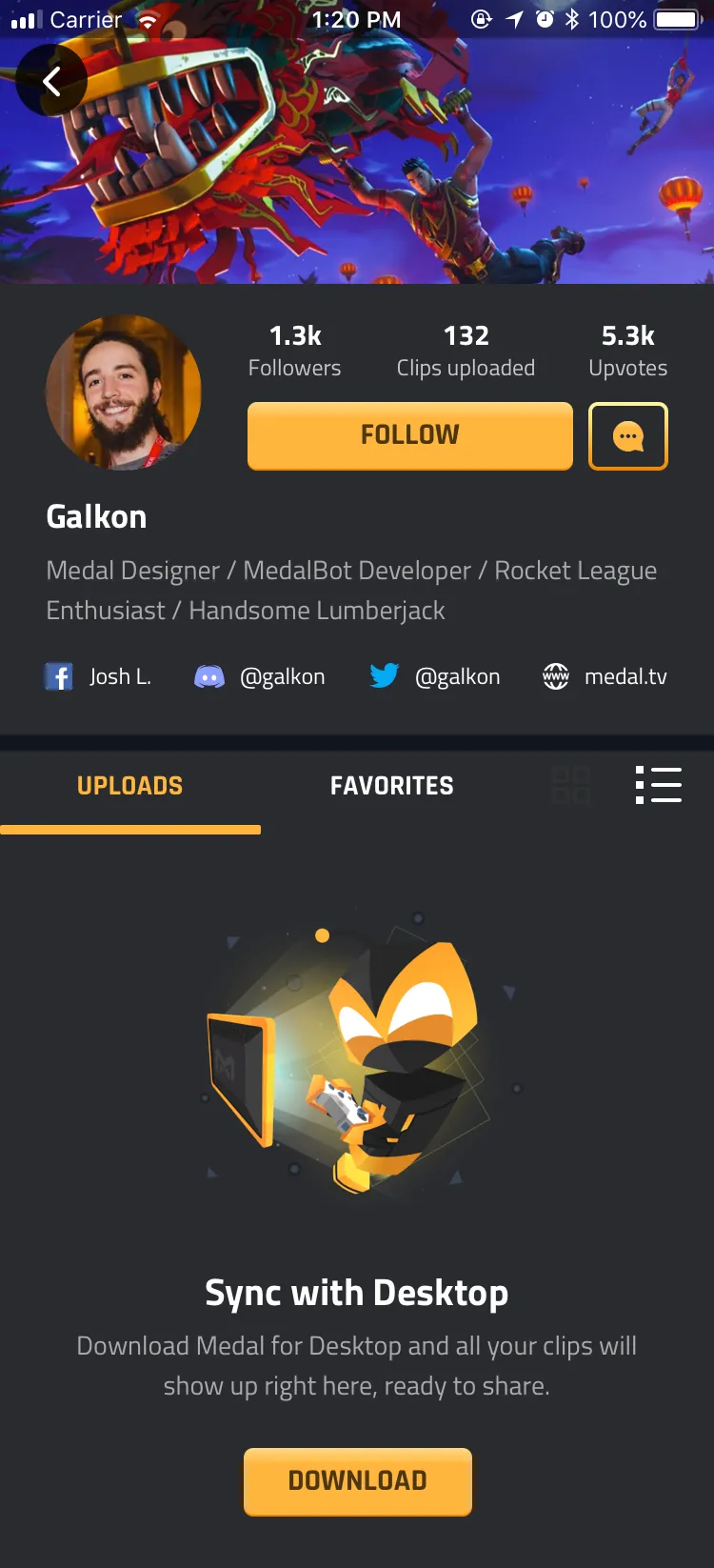
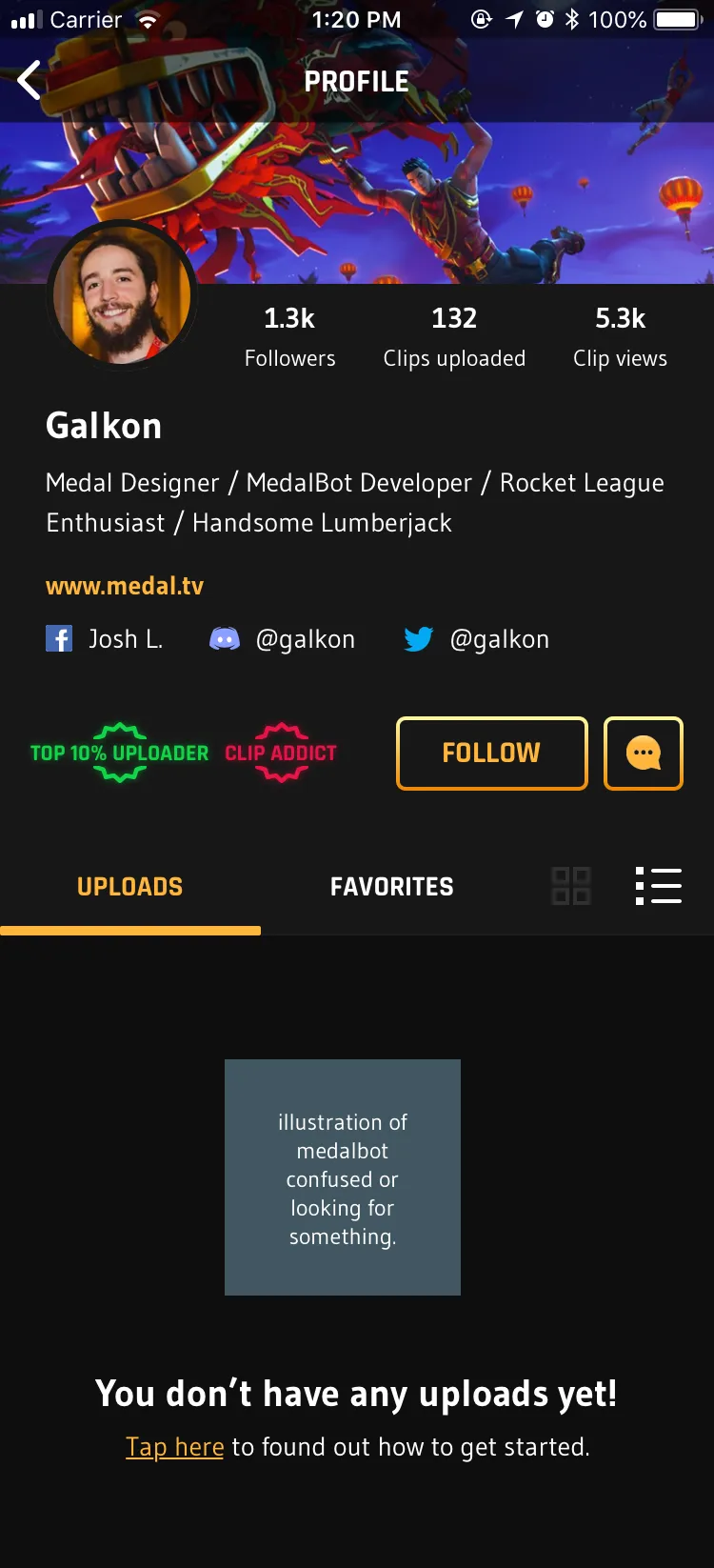
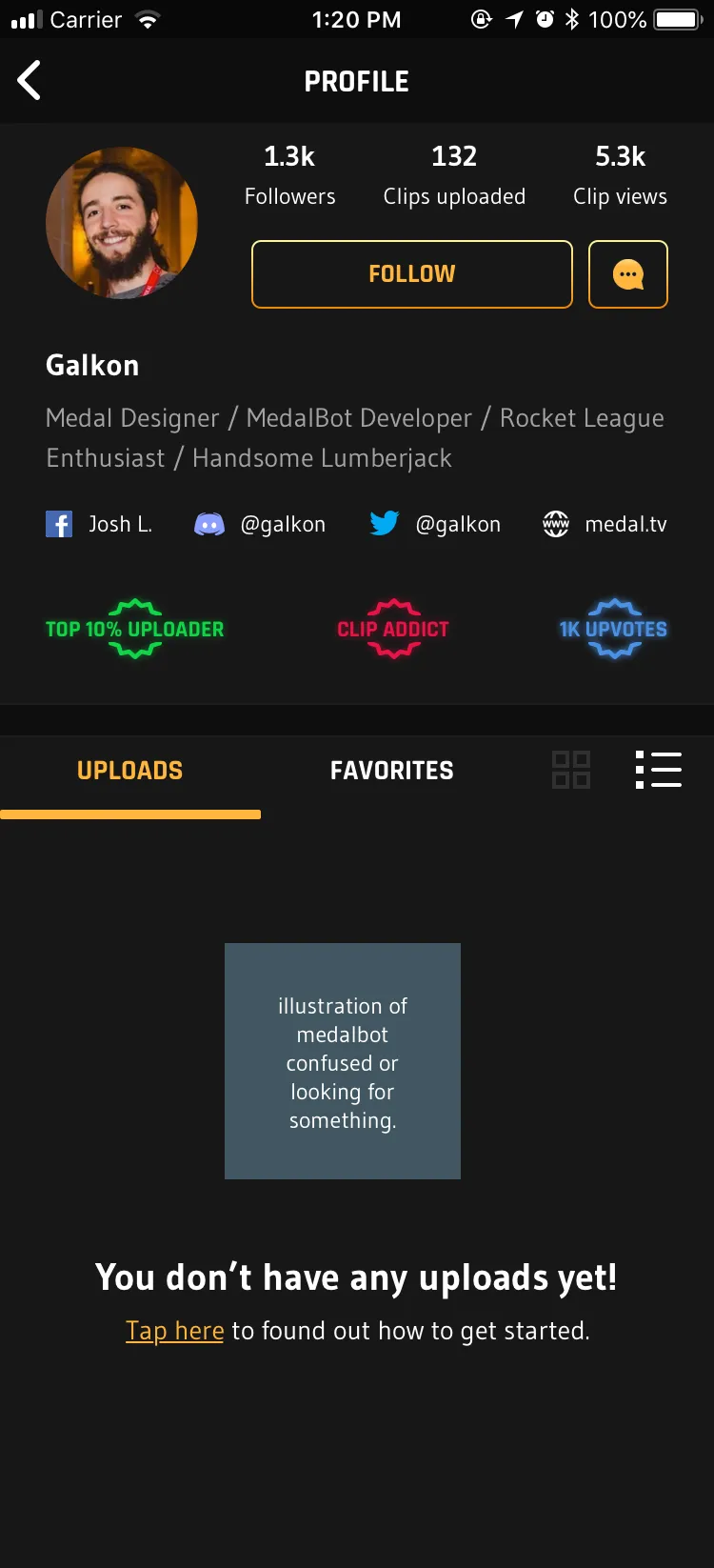
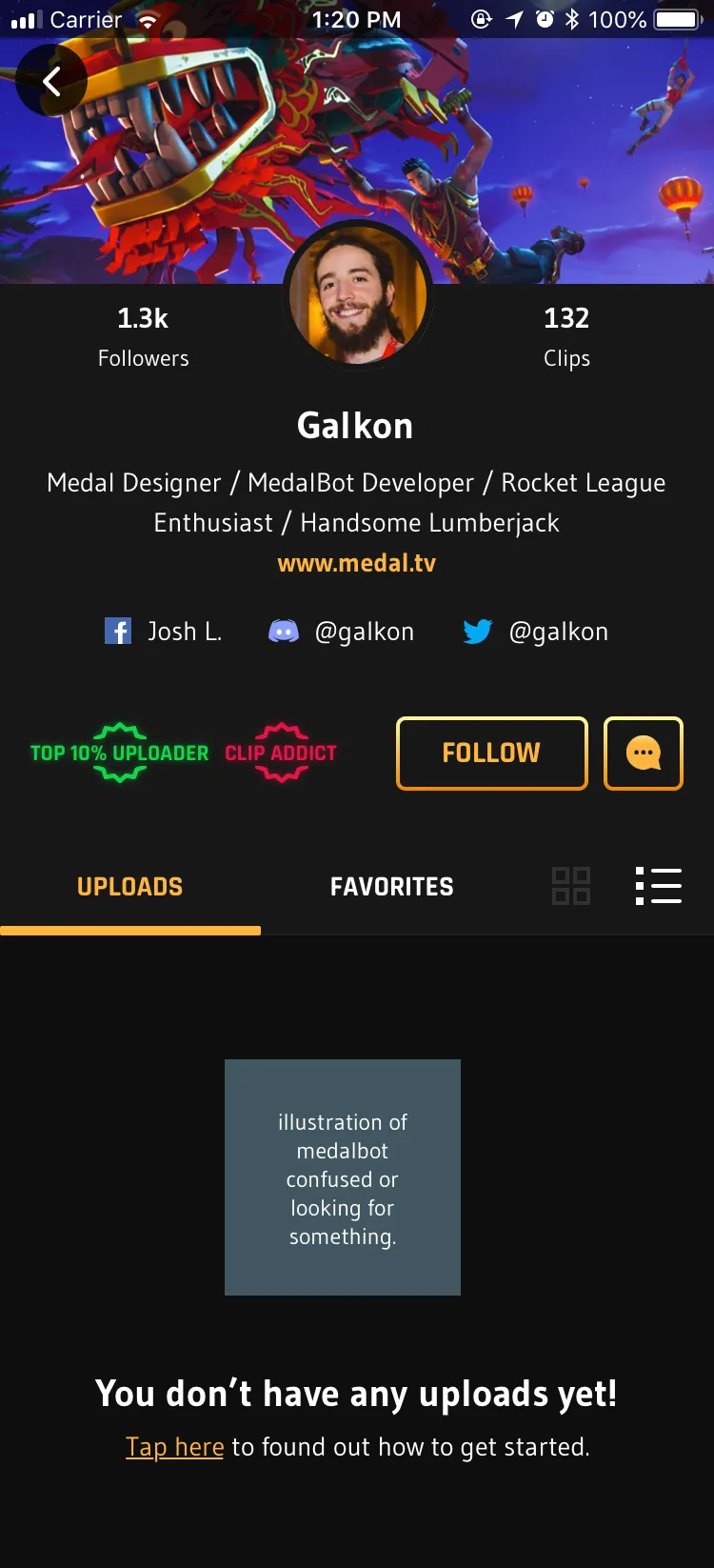
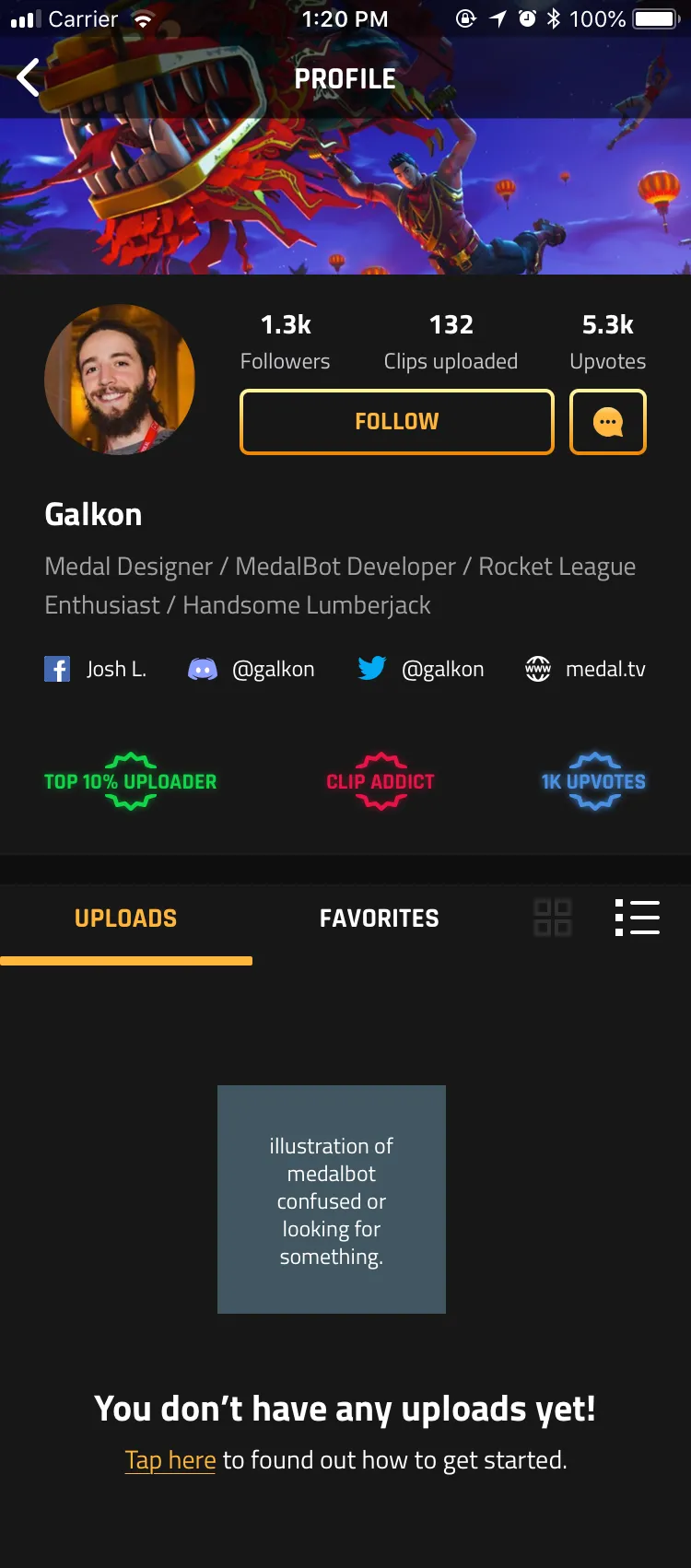
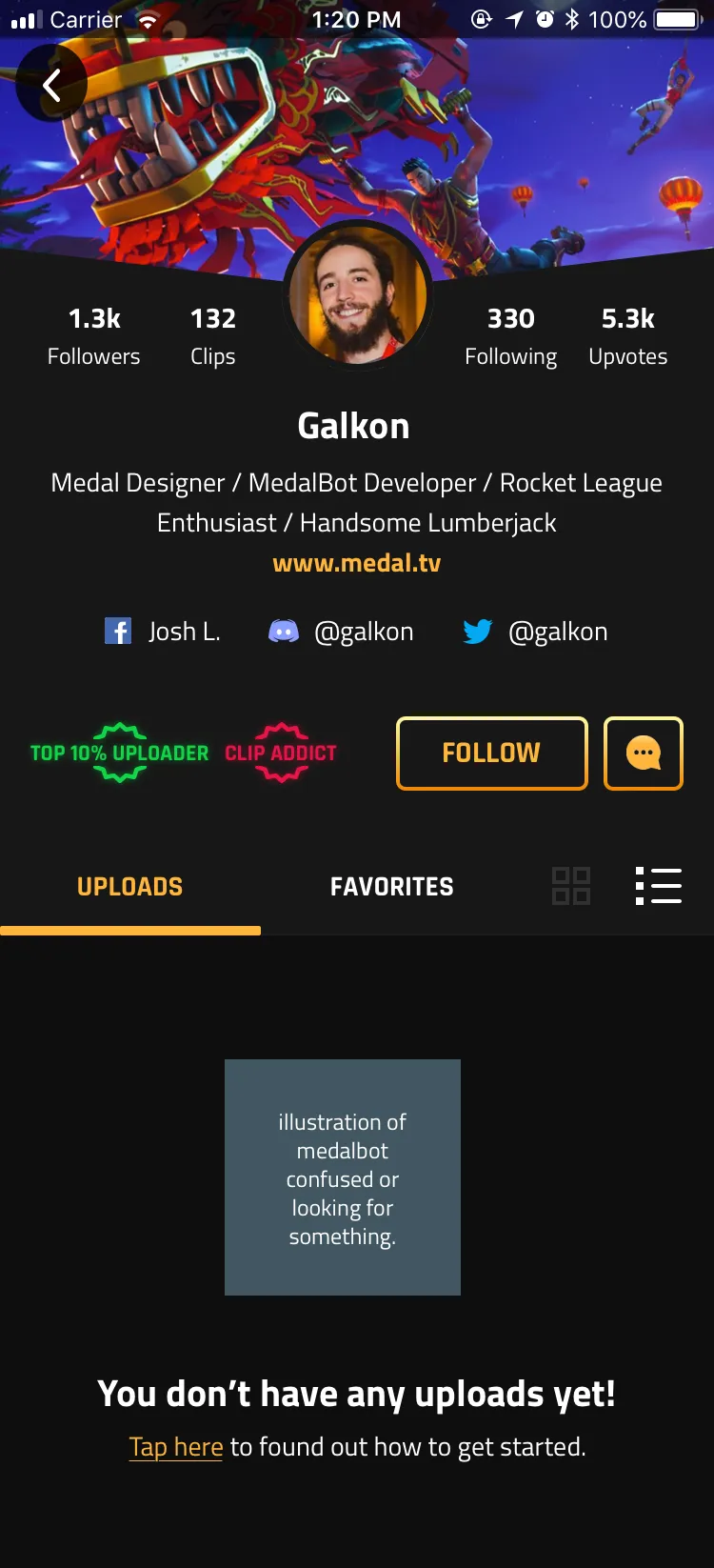
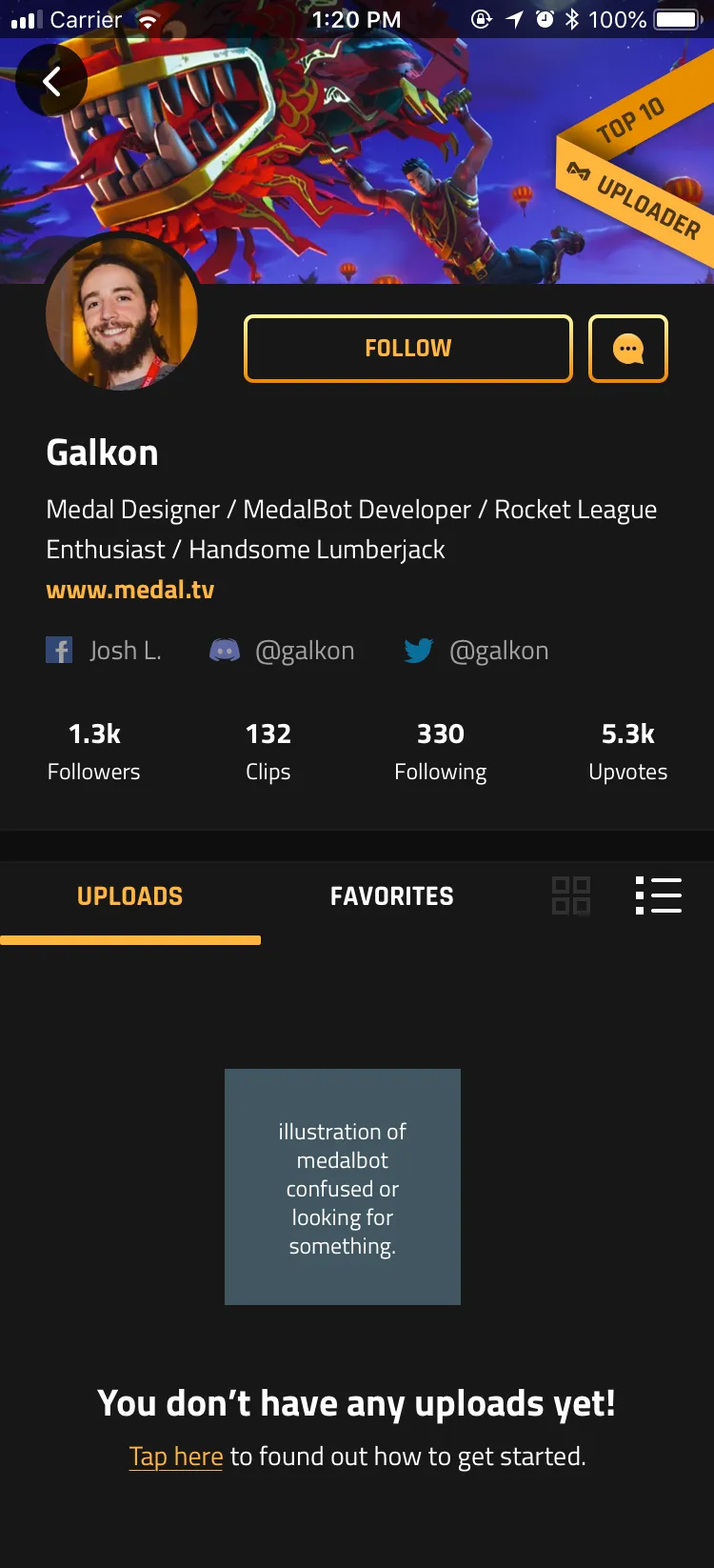
- Profiles. I designed profiles across seven iterations on mobile and matching layouts on web, with follower, clip and upvote counts, and grid and row views of a player’s clips.
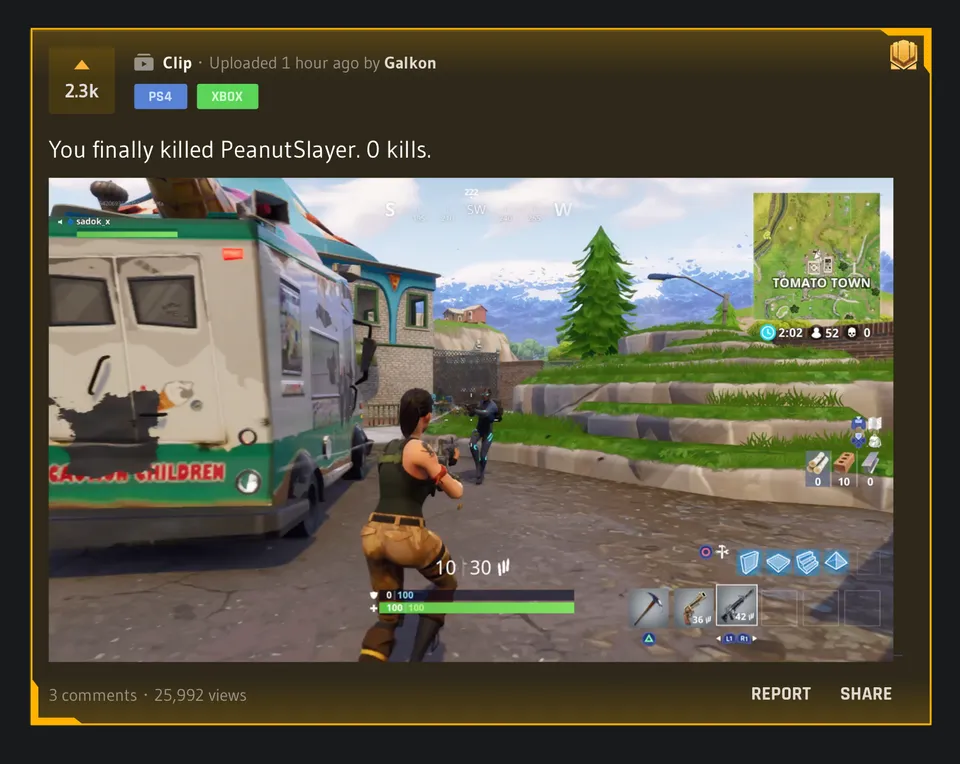
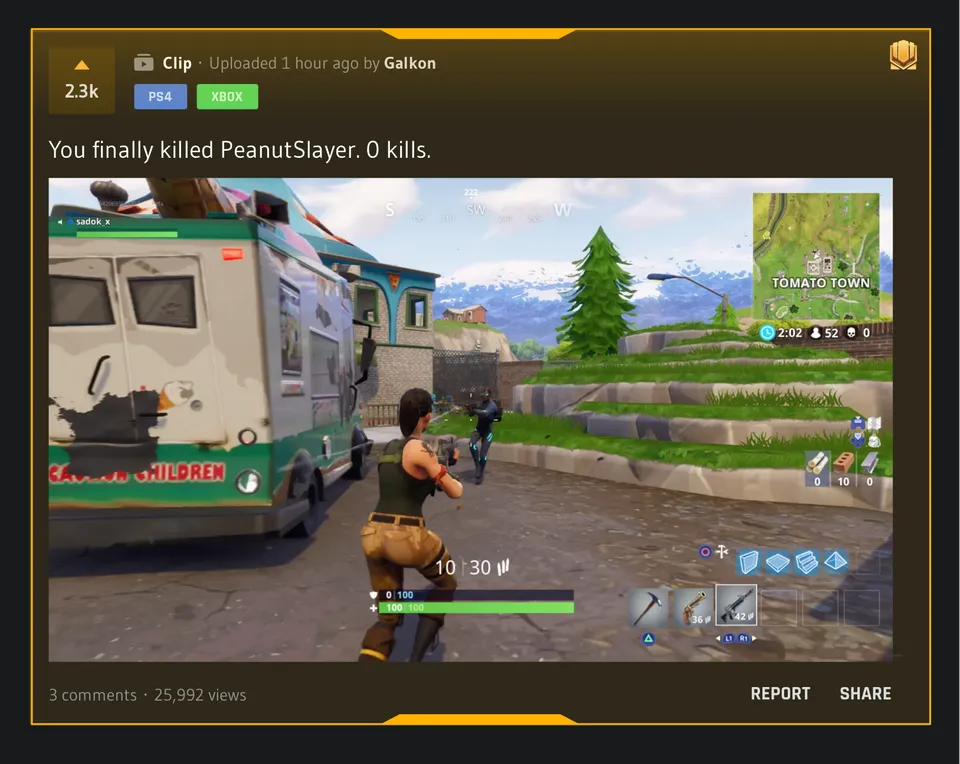
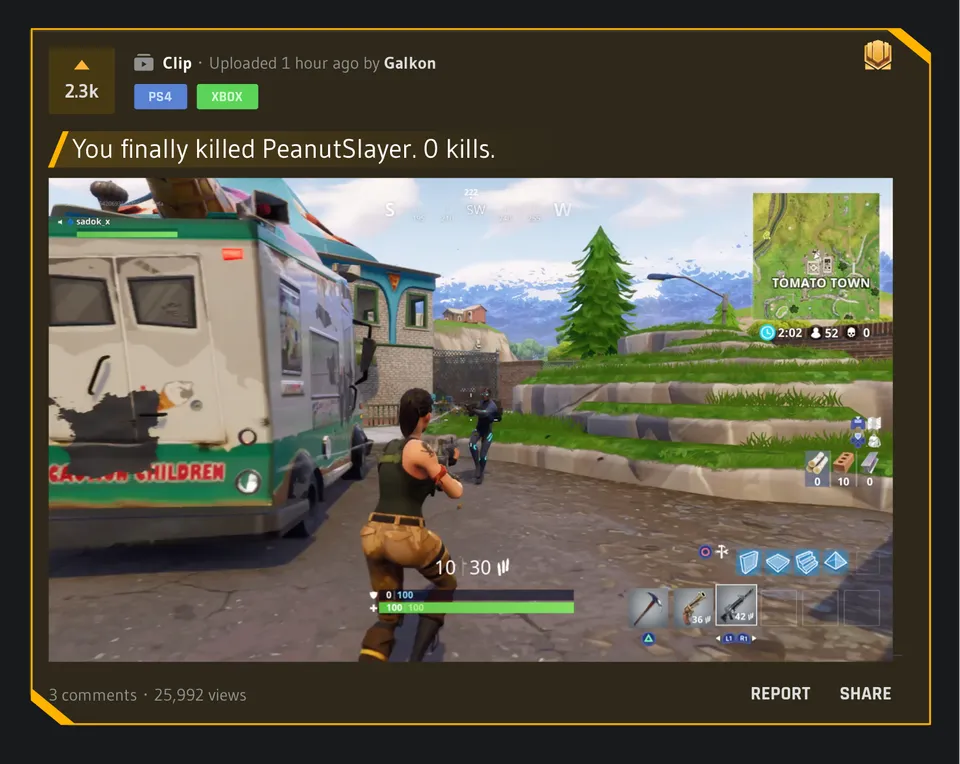
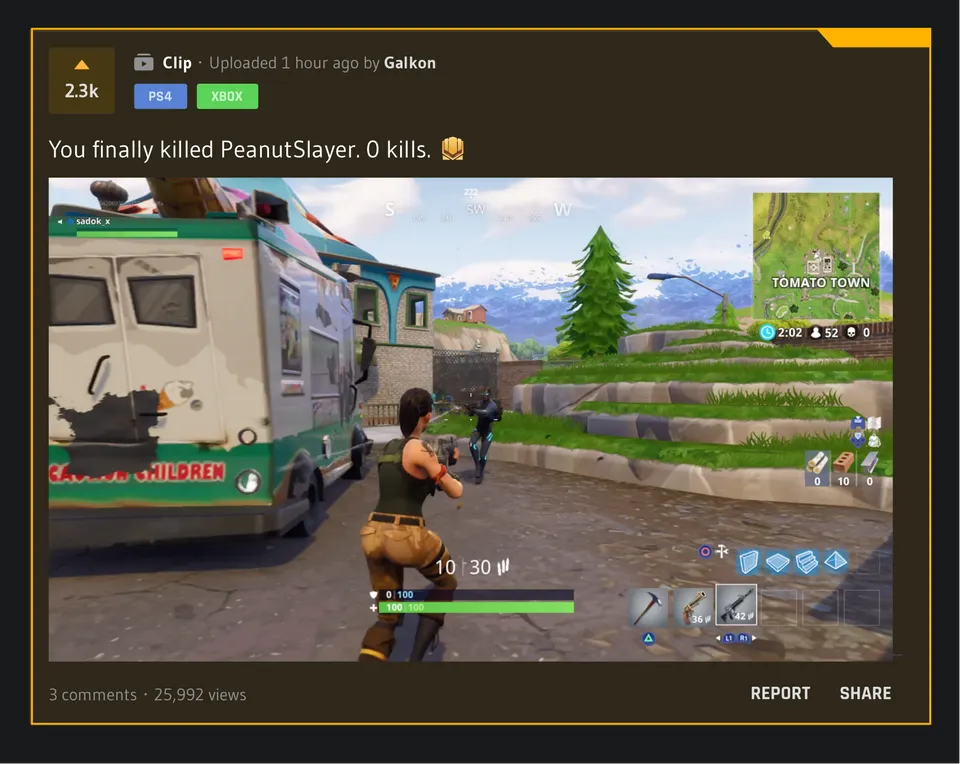
- Status and recognition. Badges like “Top 10% uploader” and “Clip addict”, upvotes, and a golden card that marks a standout clip. Medal is named after a reward, and I built recognition as a core feature.
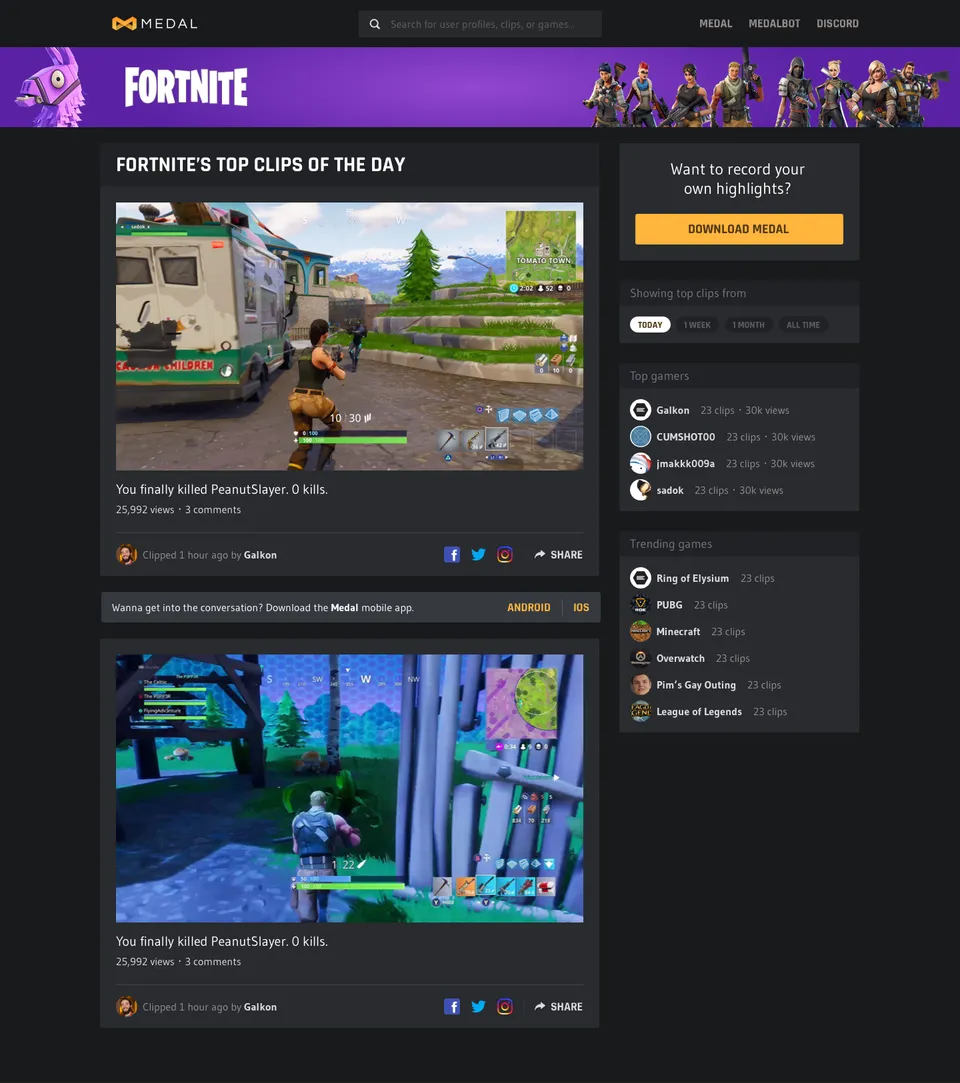
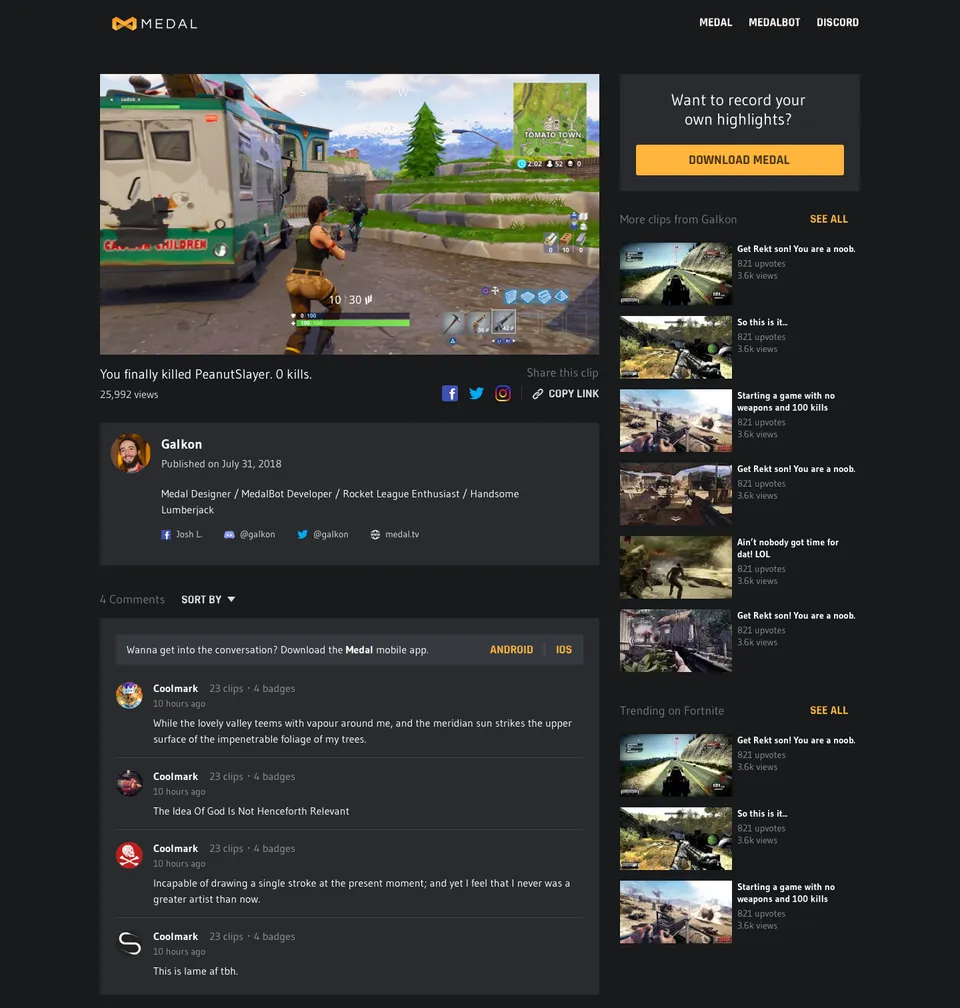
- Clip pages. Every shared clip became a page with comments, reactions, the creator’s profile and more clips to watch, built to turn a link from a friend into a new community member.
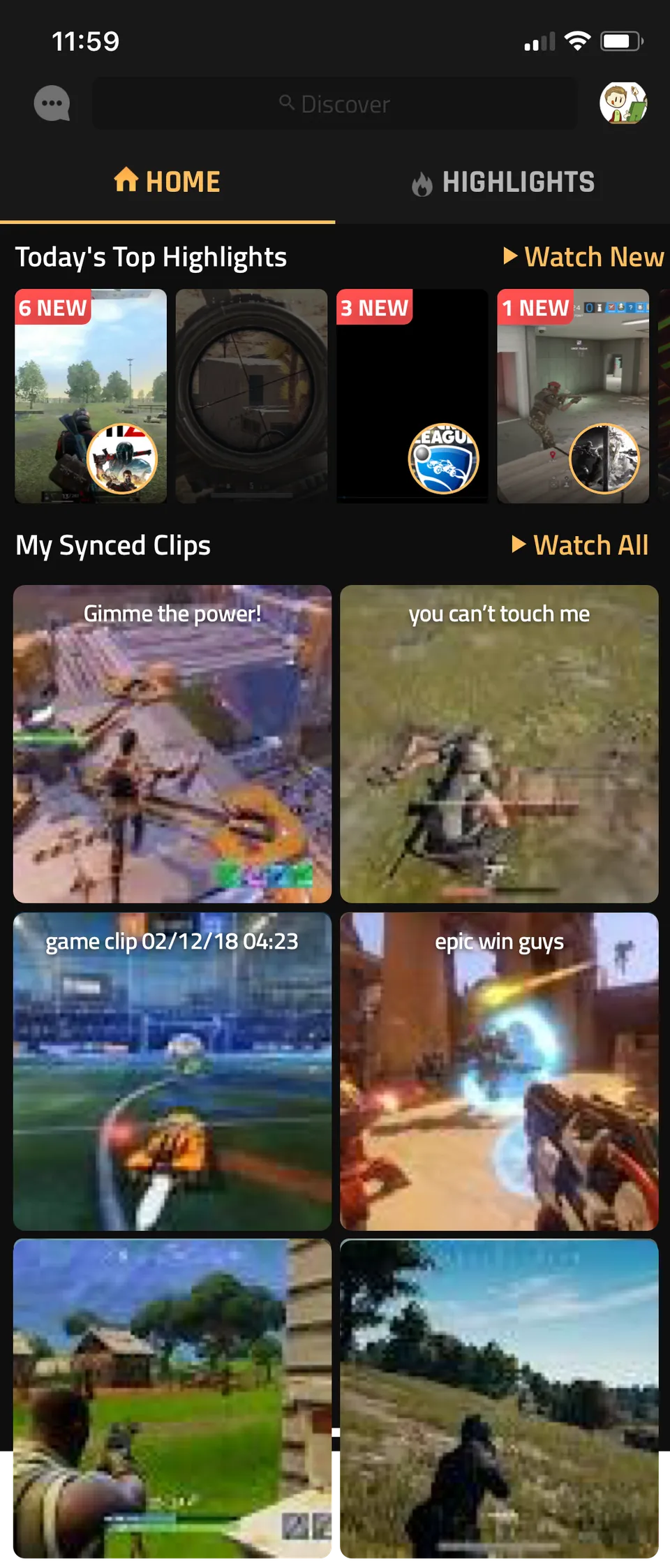
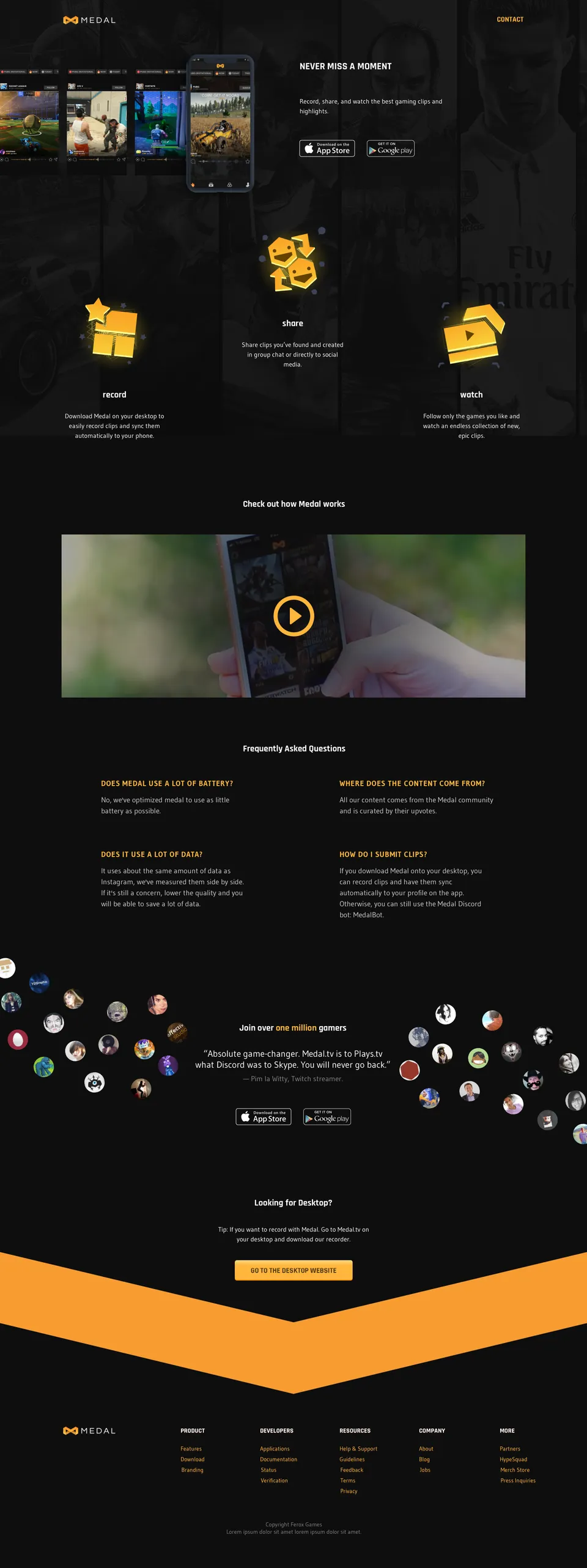
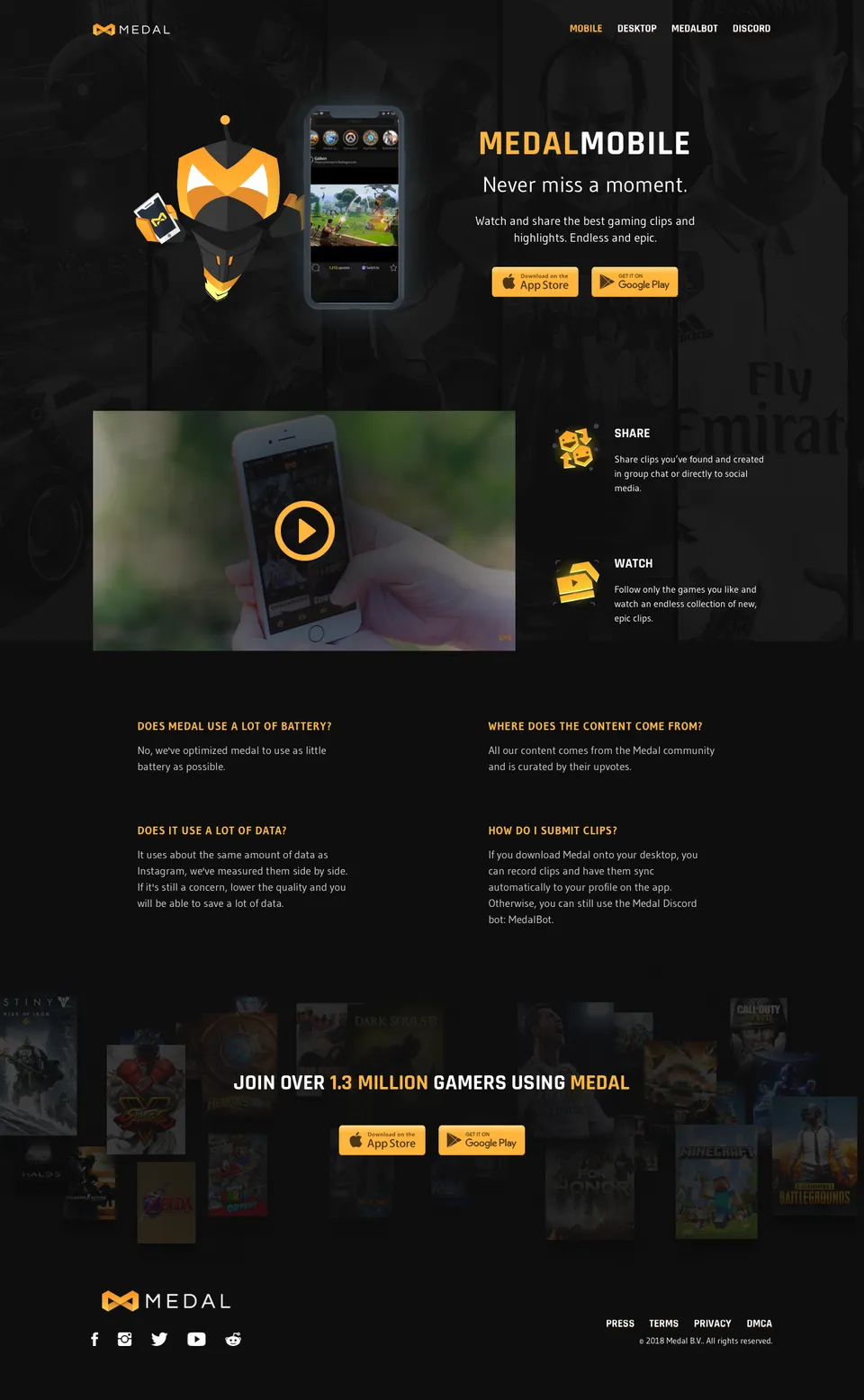
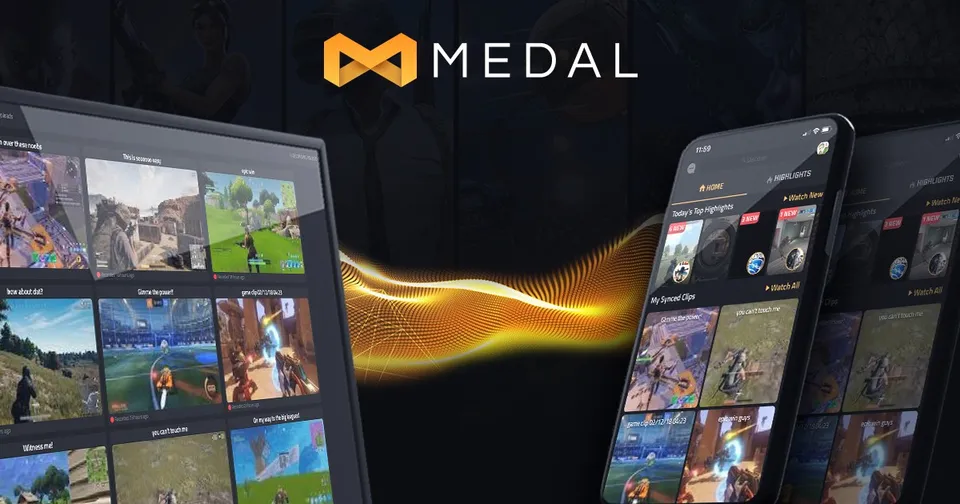
- Mobile home. “Today’s Top Highlights” and “My Synced Clips”: the clips you captured on your PC show up on your phone, ready to watch and share.
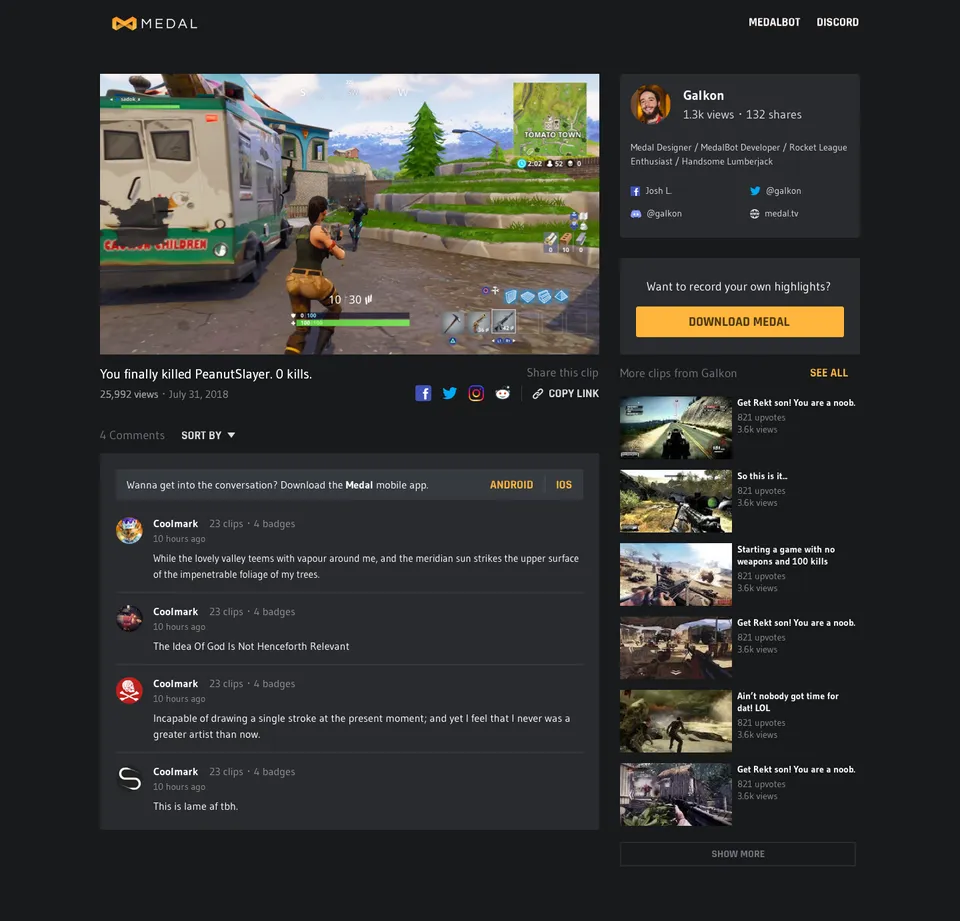
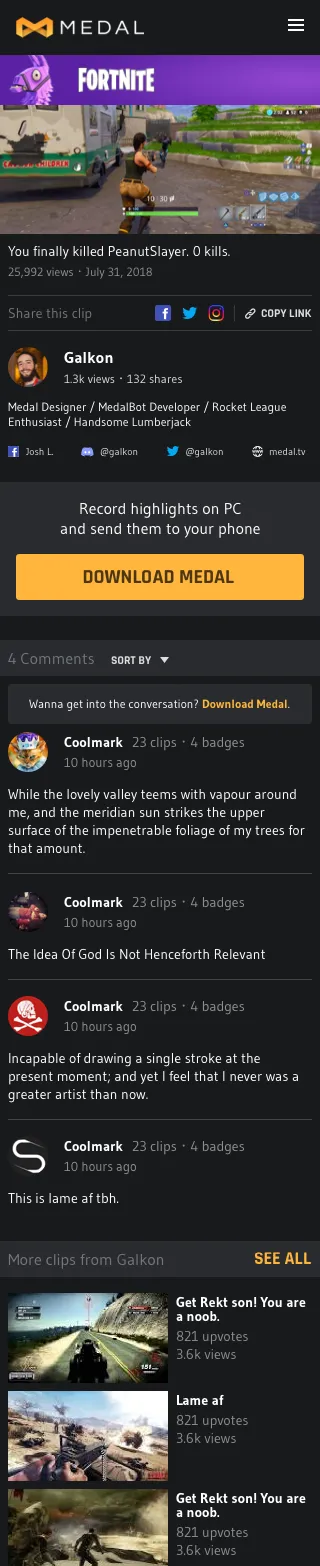
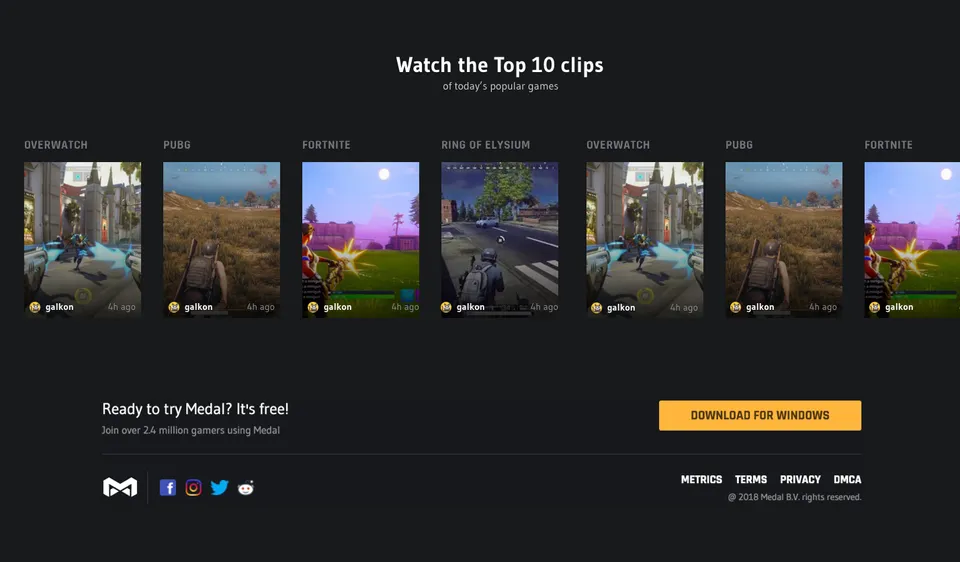
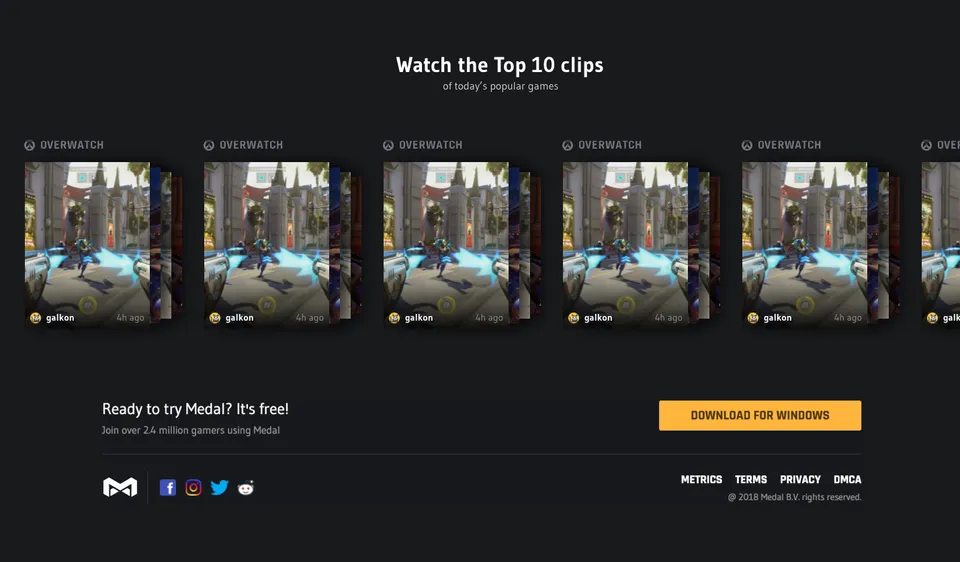
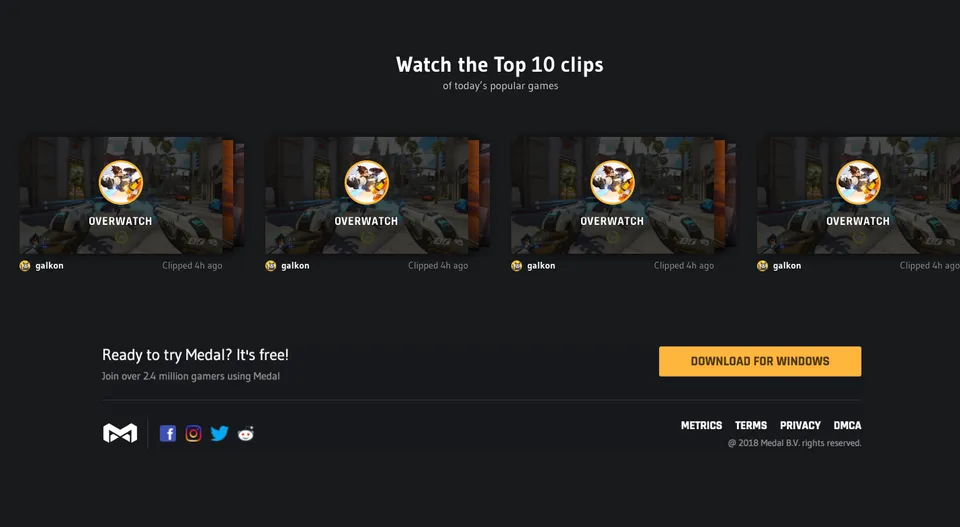
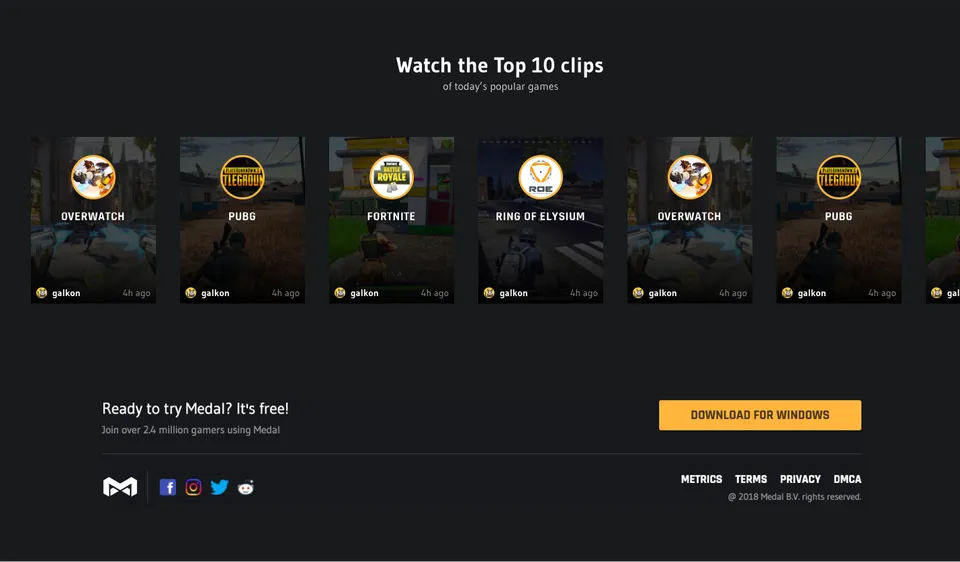
Building the brand from scratch
When I joined there was no brand. I created most of it:
- Voice. Taglines like “Clips or it didn’t happen” and “Never miss a moment.”
- Illustration. The visual language Medal used in ads, product, tutorials, swag, etc.
- MedalBot. The mascot that fronts Medal’s notifications and its Discord bot. And its friends, of course.
- Motion. The splash animation, the outro that closes every shared clip, clip watermarks, partner integrations (Razer Chroma), and 15 and 20 second video ads.
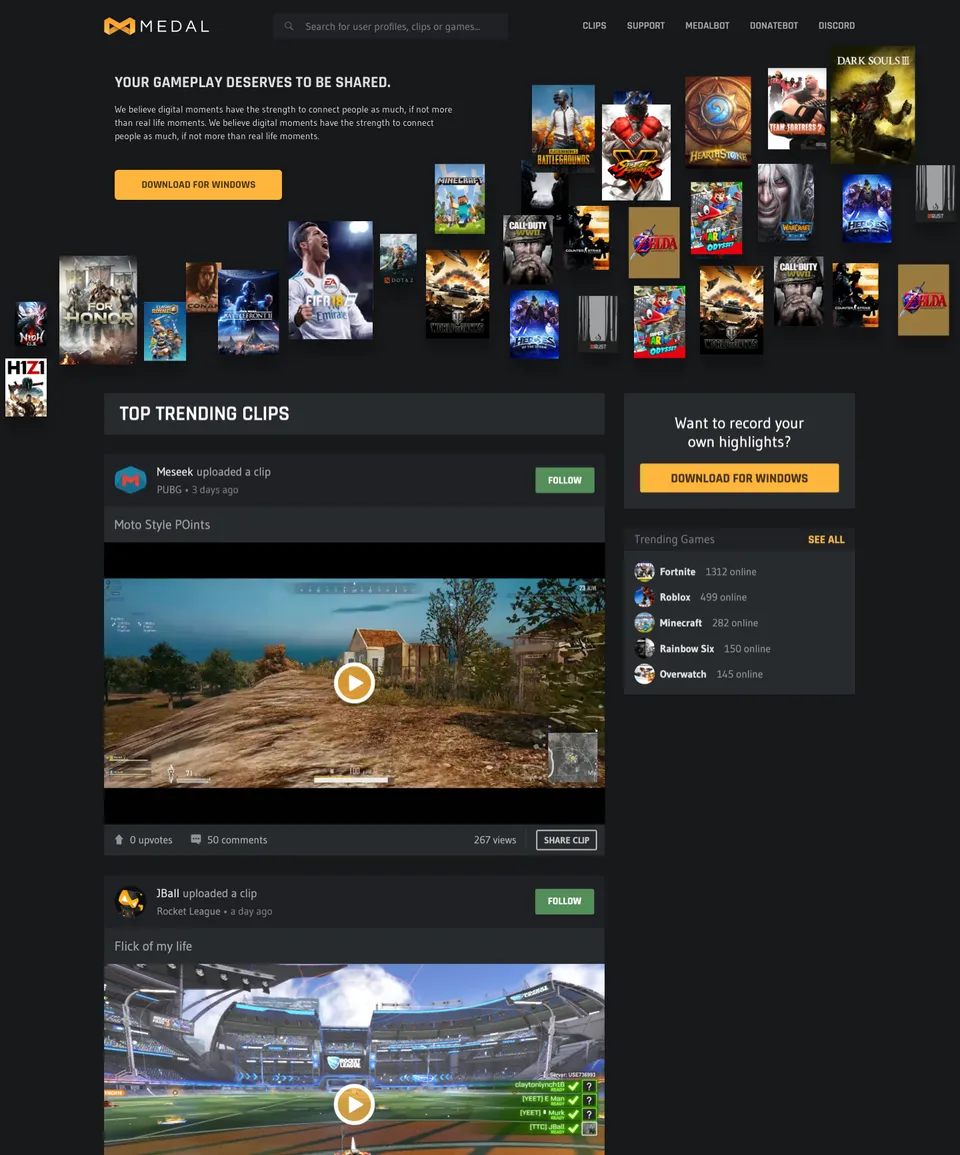
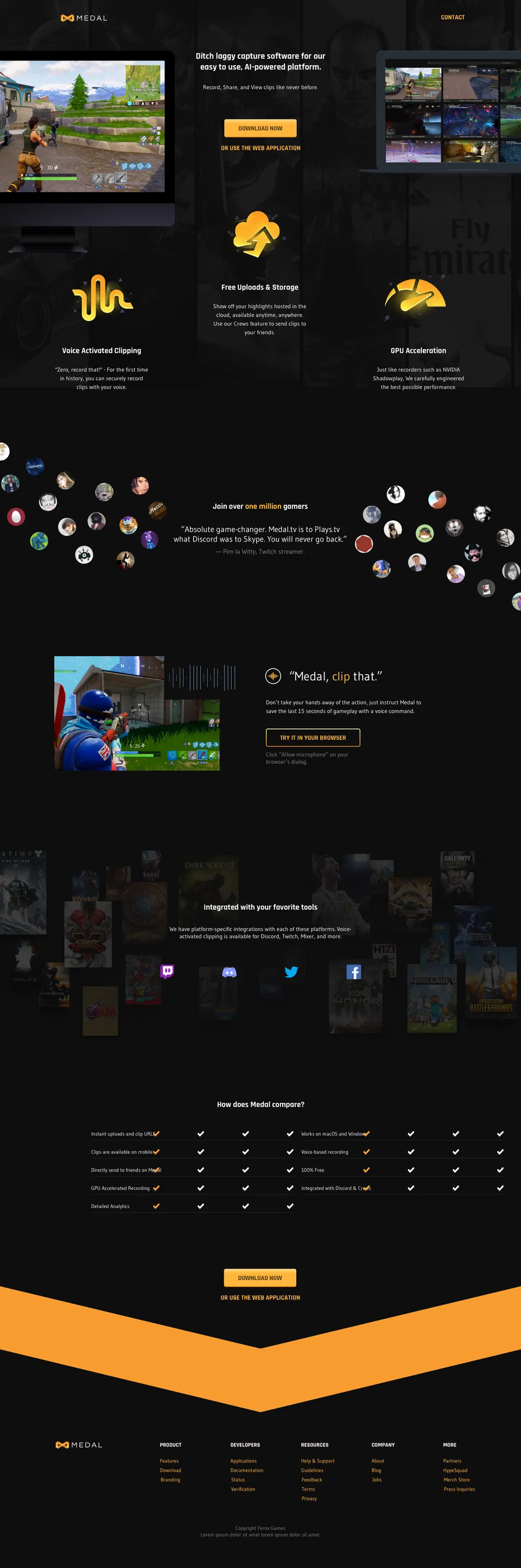
- Marketing sites. The Medal Desktop and Medal Mobile landing pages, through many iterations.
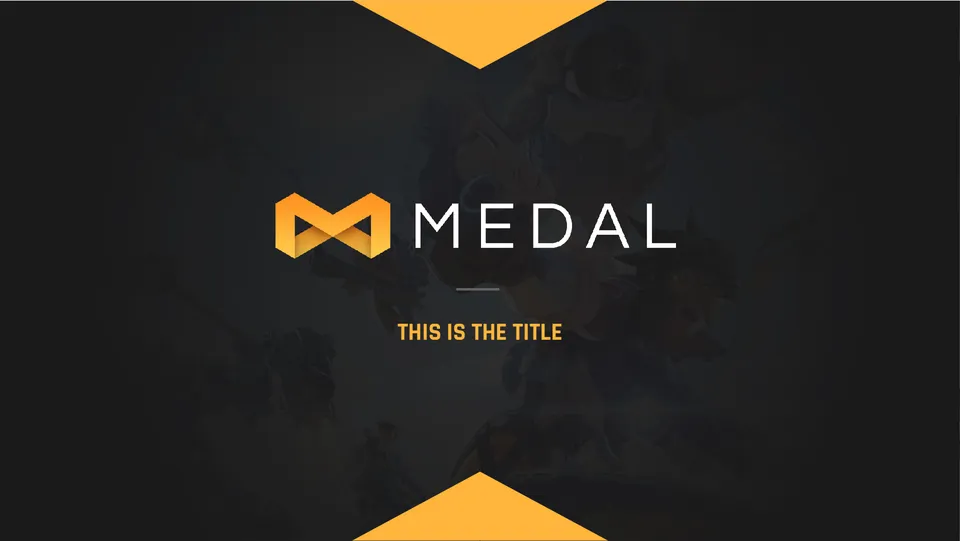
- Pitch decks. Medal’s investor info decks and the company slide template.














Beyond the core product
- Surge. I designed Surge, a dashboard for game companies and brands. It covered analytics on where clips were watched and shared, ads placed into shared clips with targeting by game, region and platform, and an ambassadors page for team members and sponsored streamers.
- Toplist.gg (prev. DiscordBots). I designed the brand and product design for Toplist.gg, one of the Medal-owned sites the company used for distribution, including its logo, graphics and brand manual.


Leading the design team
As Medal grew I hired and led a small team of two graphic designers and a front-end developer. That let me move from designing everything myself to setting direction and reviewing work across product, brand and marketing. It also allowed us to increase the output of the work given Medal’s rapidly rising needs (and rapidly rising users).
Outcome
- Medal demoed its desktop recorder at PAX East and launched it on May 5, 2018.2
- Six months after its seed round, Medal reached 6.6 million gamers organically, and creators spent an average of 23 minutes a day in the iOS app. Its desktop recorder held 80% day-one retention.1, 2
- By January 2019, medal.tv invited visitors to “Join over 2.4 million gamers using Medal.”4
- Medal kept growing after I left. In July 2024 it raised $13 million at a $333 million post-money valuation.5
What I’d do differently
Measure design impact. We moved fast and shipped many directions, as any startup should (something I also teach to my Leangap students). I’d instrument and measure which design changes moved retention, uploads and sharing, so every redesign came with evidence of what it did.
It’s a matter of balancing speed with wisdom. In some (most) cases with technology and startups, speed wins.